

Introduction: The Living Spirit of Mustang
High beyond the windswept plateaus of northern Nepal, hidden behind the towering peaks of the Annapurna and Dhaulagiri ranges, lies the ancient kingdom of Upper Mustang—a land where Tibetan Buddhism is not a relic of the past but a living, breathing way of life. Among its most powerful cultural expressions is the Tiji Festival, a three-day sacred ceremony held annually in the walled city of Lo Manthang.
The Tiji Festival 2026, expected to take place in late May 2026, offers travelers, pilgrims, photographers, and cultural explorers a rare opportunity to witness one of the most dramatic and meaningful Buddhist festivals in the Himalayas. Rooted in ancient legends, performed by monks in vibrant masked dances, and set against a surreal desert landscape of cliffs and caves, Tiji is far more than a festival—it is a spiritual purification of the land itself.
This article explores the history, meaning, rituals, itinerary, travel planning, trekking routes, culture, and significance of the Tiji Festival 2026 in complete detail.
What Is the Tiji Festival?
The word “Tiji” is derived from the Tibetan term “Tempa Chirim”, meaning “Prayer for World Peace”. The festival is deeply rooted in Vajrayana Buddhism and symbolizes the victory of good over evil, knowledge over ignorance, and harmony over chaos.
At its heart, the Tiji Festival tells the story of Dorje Jono, a deity believed to be the incarnation of the Buddha, who fought against his demonic father to save Mustang from destruction. According to legend, the demon caused prolonged droughts, storms, and suffering. Dorje Jono’s victory restored balance, brought rainfall, and ensured prosperity for the region.
Even today, the people of Mustang believe the rituals performed during Tiji protect their land, crops, livestock, and communities from natural disasters and negative forces.
Tiji Festival 2026 Dates
Although the exact dates are determined by the Tibetan lunar calendar, the Tiji Festival 2026 is expected to fall around:
- Late May 2026
- Duration: 3 days
- Location: Lo Manthang, Upper Mustang
Travelers are advised to arrive at least 1–2 days earlier to acclimatize and secure a good viewing position, as Lo Manthang becomes lively and crowded during the festival.
Why the Tiji Festival Is So Special
The Tiji Festival is unique for several reasons:
- It is celebrated only in Upper Mustang
- It has remained largely unchanged for centuries
- The rituals are performed by monks from Choede Monastery
- The setting is an ancient walled city with royal palaces and monasteries
- It blends religion, dance, art, costume, and community participation
Unlike many festivals that have become commercialized, Tiji remains deeply spiritual and community-centered, making it one of the most authentic cultural events in Nepal.
The Setting: Lo Manthang – The Walled City
Lo Manthang, the capital of Upper Mustang, sits at an altitude of approximately 3,840 meters (12,600 ft). Encircled by medieval walls, the city is home to:
- The Royal Palace
- Ancient monasteries like Jampa Lhakhang, Thubchen Gompa, and Choede Monastery
- Whitewashed mud-brick houses
- Narrow alleys filled with prayer flags and mani walls
During the Tiji Festival, the open courtyard near the palace becomes the main stage, transforming Lo Manthang into a vibrant spiritual theater.
The Three Days of Tiji Festival Explained
Day One: Invocation and Preparation
The first day marks the beginning of sacred rituals. Monks, dressed in deep red robes, gather early in the monastery to perform prayers and chant mantras. Large thangka paintings (religious scrolls) depicting Dorje Jono are displayed publicly.
Masked dances begin slowly, symbolizing the awakening of spiritual forces. The atmosphere is solemn yet powerful. Locals arrive in traditional attire, carrying offerings of barley, butter lamps, and incense.
This day represents the summoning of protective deities and the identification of negative energies affecting the land.
Day Two: The Dramatic Dance of Conflict
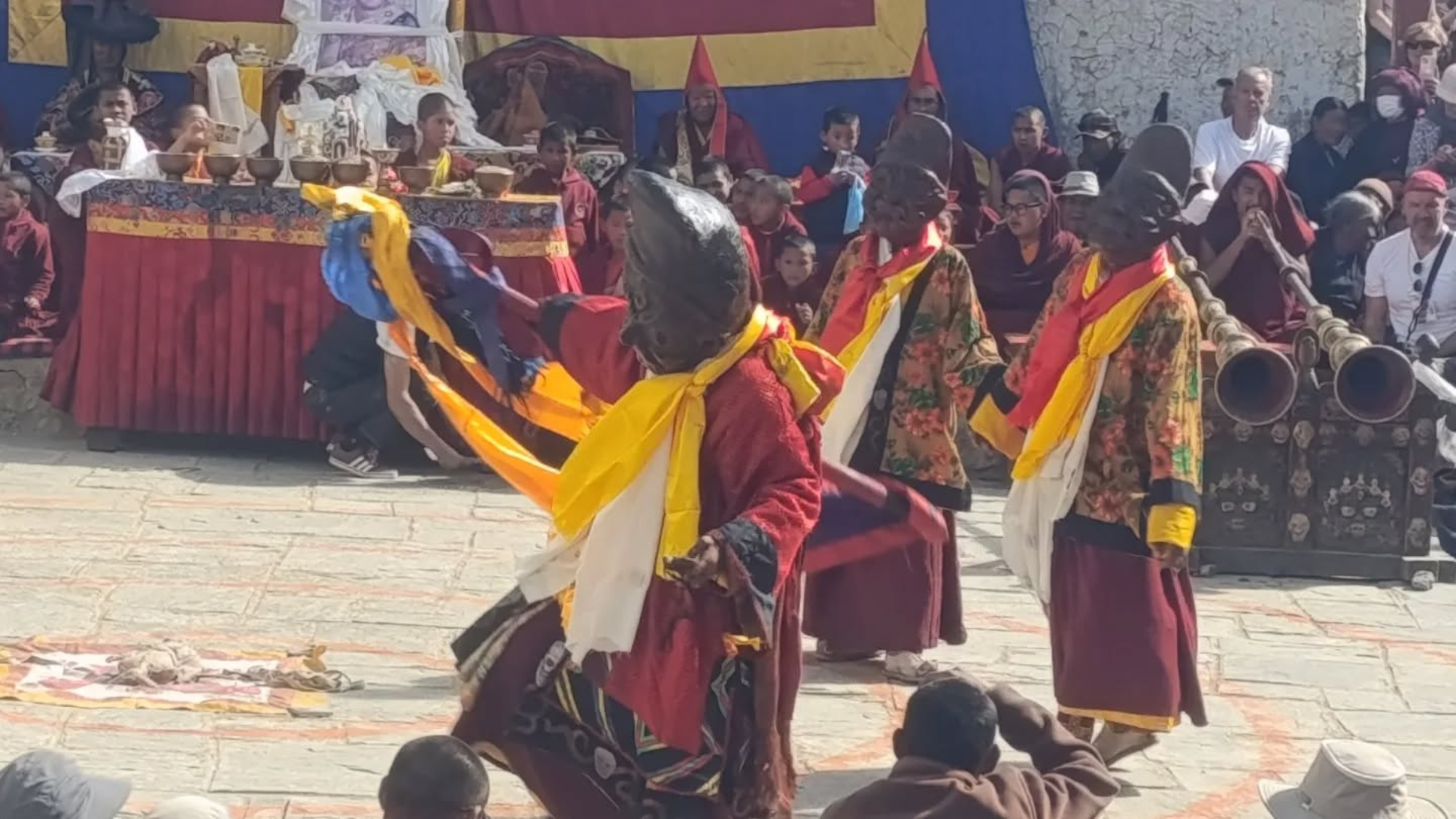
The second day is the most visually striking and emotionally intense. Monks wear elaborate masks representing gods, demons, animals, and spirits. The dances become faster and more dramatic, reenacting the fierce battle between Dorje Jono and demonic forces.
Drums, cymbals, long horns, and chanting echo through the valley. Each movement has symbolic meaning—subduing ego, ignorance, greed, and fear.
This day represents the struggle between good and evil, reminding observers of the inner battles every human faces.
Day Three: Victory, Purification, and Blessings
On the final day, Dorje Jono symbolically defeats the demon. Effigies representing evil forces are destroyed, and purification rituals are performed.
The atmosphere shifts to celebration and relief. Monks offer blessings to the crowd, and locals believe the coming year will be safe, fertile, and prosperous.
This day symbolizes renewal, balance, and hope.
Cultural Importance for the Local People
For the people of Mustang, Tiji is not entertainment—it is essential to survival. In a harsh environment where agriculture depends on fragile weather patterns, spiritual balance is taken seriously.
Families travel from remote villages to attend the festival. Elders pass stories to children. Young people learn traditional dress, customs, and values. Tiji strengthens community bonds and preserves cultural identity in a rapidly changing world.
Traditional Dress and Costumes
During the festival, locals wear their finest traditional attire:
- Women wear striped aprons (pangden), turquoise jewelry, and coral beads
- Men wear chubas (traditional Tibetan robes)
- Monks wear ceremonial hats and silk brocade costumes
The masks used in the dances are handcrafted, often centuries old, and considered sacred objects.
Photography and Filming at Tiji Festival
The Tiji Festival 2026 is a dream for photographers, but respect is crucial.
Tips:
- Always ask before close-up portraits
- Do not interrupt rituals
- Avoid flash during ceremonies
- Dress modestly
The best shots often come from observing patiently and blending into the crowd.
How to Reach Upper Mustang for Tiji Festival 2026
Route Overview
- Kathmandu → Pokhara (flight or drive)
- Pokhara → Jomsom (flight or jeep)
- Jomsom → Kagbeni → Lo Manthang (jeep or trek)
Trekking Option
Many travelers choose to trek to Lo Manthang, passing through:
- Kagbeni
- Chele
- Syangboche
- Ghami
- Tsarang
This allows gradual acclimatization and deeper cultural immersion.
Permits Required
Upper Mustang is a restricted area, requiring special permits:
- Restricted Area Permit (RAP): USD 500 for 10 days
- ACAP (Annapurna Conservation Area Permit)
Travel must be arranged through a registered trekking agency, and a licensed guide is mandatory.
Accommodation During the Festival
Accommodation in Lo Manthang is limited:
- Traditional teahouses
- Small lodges
- Family-run guesthouses
During Tiji Festival, rooms fill quickly. Early booking is essential. Expect simple but warm hospitality.
Food and Local Cuisine
Meals are simple and nourishing:
- Tsampa (roasted barley flour)
- Tibetan bread
- Dal bhat
- Thukpa (noodle soup)
- Butter tea
Food is often shared during the festival, reinforcing community spirit.
Best Time and Weather in May
May is ideal for Upper Mustang:
- Dry climate (rain shadow area)
- Clear skies
- Daytime temperatures: 12–20°C
- Cool nights
Perfect for trekking and cultural exploration.
Responsible and Sustainable Travel
Visitors to Tiji Festival should:
- Respect local customs
- Avoid plastic waste
- Support local businesses
- Hire local guides and porters
Your presence should help preserve Mustang’s heritage, not exploit it.
Why Attend Tiji Festival 2026?
You should experience Tiji Festival 2026 if you seek:
- Authentic Himalayan culture
- Spiritual depth beyond sightseeing
- Rare Buddhist rituals
- Epic landscapes
- Meaningful travel experiences
This is not a festival you simply watch—it is one you feel.
Conclusion: A Journey Beyond Time
The Tiji Festival 2026 is a journey into the soul of the Himalayas. It connects ancient legends with modern travelers, sacred rituals with dramatic landscapes, and quiet devotion with vibrant celebration.
In a world moving faster every day, Tiji invites you to slow down, observe, reflect, and reconnect—with culture, spirituality, and yourself.
Standing in the courtyard of Lo Manthang, prayer flags fluttering in the wind, monks dancing to rhythms older than history, you realize that some traditions do not need to change. They only need to be witnessed, respected, and remembered.


