
Introduction
Best Monsoon Treks in Nepal 2026: Ultimate Upper Mustang & Dolpo Guide in Nepal (June to August) is usually associated with rainy weather, slippery paths, leeches, and poor visibility on popular trekking routes. This time of the year is not suitable for most hikers. However, there are alternative trekking options in Nepal that are completely dry and free of crowds during the rainy season. They are called the rain-shadow regions. The high peaks of the Himalayas intercept most of the rainfall, so only the southern slope of the mountains is relatively wet and covered with clouds.
Meanwhile, the area extending to the north of the main Himalayan massif stays dry, offering great trekking opportunities. Upper Mustang, Dolpo, and Nar Phu Valley are particularly popular and unique regions offering shelter from torrential rains, long muddy stretches, leeches, and crowds of tourists. In 2026 these regions are especially worth visiting as compared to other years, the monsoon season is calmer, less expensive, and provides more opportunities for unique cultural experiences. This guide will provide you with general information about monsoon trekking in Nepal in 2026 and help you choose the most suitable option depending on your preferences and budget.
The article will give you an overview of the following:
• The best monsoon trekking regions in Nepal – Upper Mustang, Dolpo, other rain shadow areas
• The most suitable trekking itineraries during the rainy season
• Price list for permits in Nepal in 2026
• Budget planning for monsoon trekking
• Weather conditions in Nepal during the rainy season
• Essential packing list for trekking in Nepal
• The most relevant tips for trekking in Nepal during the rainy season

Rain shadow regions in Nepal are very convenient for trekking during the rainy season.
Compared to the capital or Pokhara, the amount of precipitation in Upper Mustang in July can be 10 times lower than in Kathmandu or Pokhara. The trails are therefore dry and dusty, while morning views over the Himalayas are often clear. In the afternoon, the sky is often covered with clouds, but massive downpours are rare. The main advantages of trekking in Nepal during the rainy season include:
• Fewer crowds than during the peak season of spring and autumn
• Lower prices for accommodation and tour packages
• Warm weather
• Unique landscapes and cultural experiences
• Possibility to undertake multi-day treks
It should be noted, that during the rainy season, the road or flight to the regions of Upper Mustang, Dolpo, and Nar Phu can be temporarily closed due to adverse weather conditions. Therefore, it is important to plan enough time for the trip.
1. Upper Mustang Trek – The Best Monsoon Trek in Nepal 2026
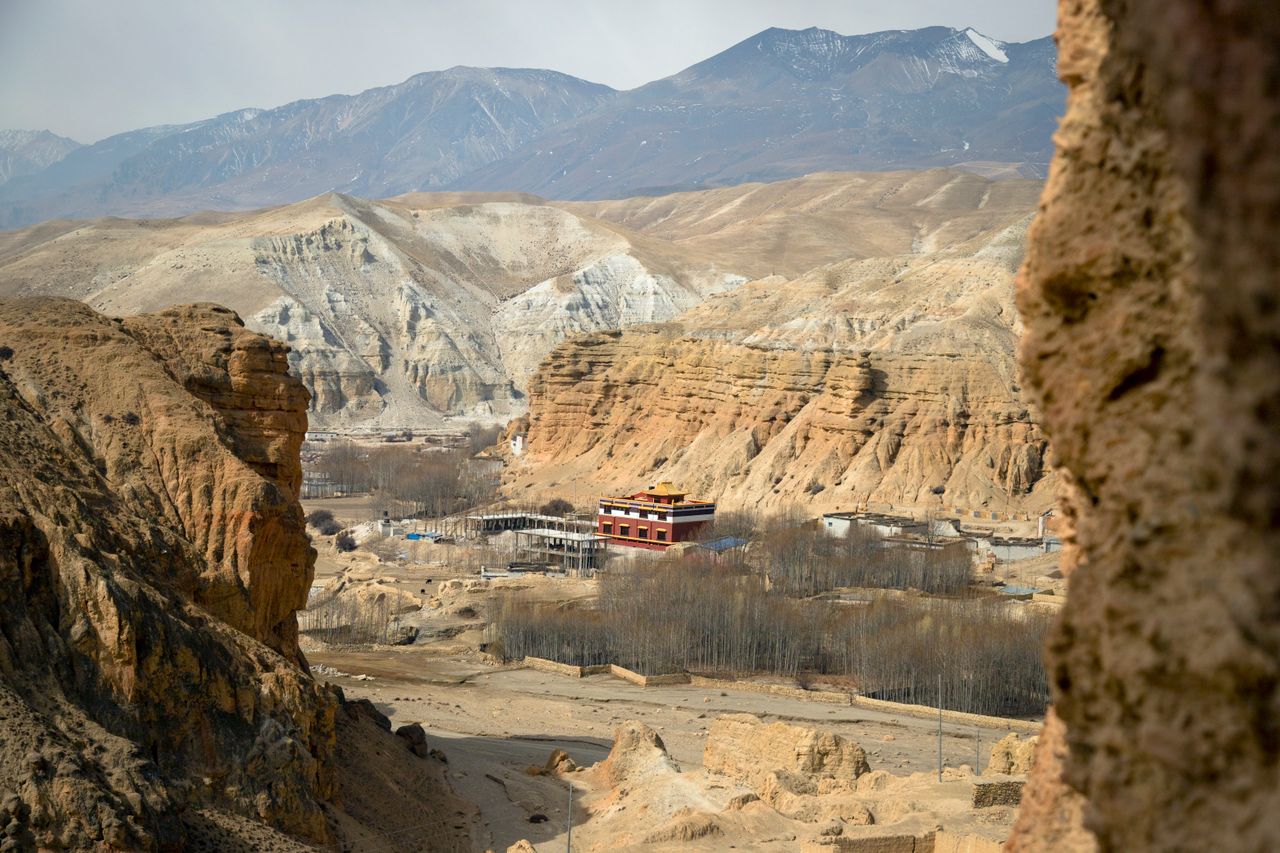
Upper Mustang region is the best choice for a monsoon trekking in Nepal. Surrounded by the rain shadow of Annapurna and Dhaulagiri ranges, this mysterious region has a unique character that resembles the Tibetan Plateau rather than the rest of Nepal. Ancient rock cliffs carved out by hanging valleys, pale yellow canyons, and the impressive walled city of Lo Manthang are some of the highlights of this trekking destination.
Highlights for 2026:
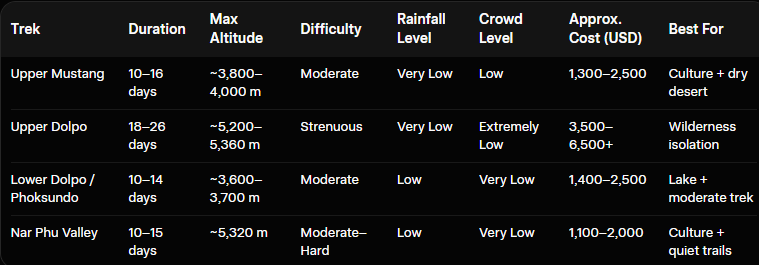
• Trekking duration: 10-16 days (on average, round trip from Kathmandu)
• Maximum altitude: around 3,800-4,000m in Lo Manthang and Lo village
• Physical demands: moderate
• Accommodation: teahouses, guesthouses
• Best for: cultural experience and photography, trekking in dry season.

Upper Mustang Permit Cost 2026
The permit fee for Upper Mustang RAP (Restricted Area Permit) is now changed to USD 50 per person per day (previously it was a fixed USD 500 for 10 days of exploration in the region). You pay for the number of days you spend in the area restricted to the ordinary tourists (from Kagbeni village). So:
• For 7-day trekking inside the region: USD 350
• For 10-day trekking inside the region: USD 500
• For 14-day trekking inside the region: USD 700
Other Permits:
• Annapurna Conservation Area Permit (ACAP): around NPR 3,000 (equivalent to USD 23-30)
• TIMS card: usually required and costs around NPR 2,000/USD 15
Note: A trekking guide is mandatory for Upper Mustang. The requirement for a minimum of two people for a group has been abolished, so you can get your permit as a solo traveler, but you still need to hire a licensed guide through an official trekking agency.
Itinerary of Upper Mustang Trek
Day 01 : Arrival in Kathmandu (1,400m)
Day 02 : Drive Kathmandu to Pokhara (200 km, 6–8 hrs, 1,400m → 822m)
Day 03 : Flight Pokhara to Jomsom + Trek Jomsom to Kagbeni (Flight 60 km / 25 min, Trek 8 km / 3–4 hrs, 822m → 2,720m → 2,810m)
Day 04 : Trek Kagbeni to Chele (10 km, 4–5 hrs, 2,810m → 3,055m)
Day 05 : Trek Chele to Syangboche (12 km, 5–6 hrs, 3,055m → 3,930m)
Day 06 : Trek Syangboche to Ghami (10 km, 4–5 hrs, 3,930m → 3,520m)
Day 07 : Trek Ghami to Charang (7 km, 3–4 hrs, 3,520m → 3,560m)
Day 08 : Trek Charang to Lo-Manthang (12 km, 5–6 hrs, 3,560m → 3,810m)
Day 09 : Explore Lo-Manthang (Rest day, 3,810m)
Day 10 : Trek Lo-Manthang to Yara (14 km, 6–7 hrs, 3,810m → 3,650m)
Day 11 : Trek Yara to Tangge (12 km, 5–6 hrs, 3,650m → 3,340m)
Day 12 : Trek Tangge to Chhusang (14 km, 6–7 hrs, 3,340m → 2,980m)
Day 13 : Trek Chhusang to Muktinath (15 km, 6–7 hrs, 2,980m → 3,750m)
Day 14 : Trek Muktinath to Jomsom (19 km, 6–7 hrs, 3,750m → 2,720m)
Day 15 : Flight Jomsom to Pokhara (60 km, 25 min flight, 2,720m → 822m)
Day 16 : Drive Pokhara to Kathmandu (200 km, 6–8 hrs, 822m → 1,400m)
Day 17 : Final Departure
Upper Mustang Trek Cost 2026
The total cost for a standard 12–17-day upper Mustang trekking package with a guide and a porter per person ranges between USD 1,300-2,500 on average, depending on the group size, level of services, and the mode of transportation used (by plane or by drive).
Here is a general breakdown of the trek cost (for a mid-range and for a group of two):
RAP permit (for 10 days): USD 500
ACAP + TIMS permit: USD 40-50
Guide + Porter (shared): USD 400-500
Round-trip flights (Pokhara-Jomsom): USD 250-350
Accommodation + Meals: USD 400-600
Transportation + other expenses: USD 150-250
Note that the lower price range is available for budget tours while private / luxury classes cost more. In addition, monsoon season (June to September) usually has better rates than the busy autumn season (October to November).
2. Upper Dolpo Trek – High Himalayas Wilderness
Upper Dolpo is another remote region of Nepal located far away from any roads. This area is known for its vast wilderness landscapes set in the shadow of the Dhaulagiri massif, with a stunning turquoise lake and medieval Bon and Buddhist monasteries.
Here are the general details about the Upper Dolpo trek:
Duration: 18-26 days (depending on the chosen route)
Maximum altitude: 5,190m – 5,360m (Kang La pass or similar)
Level: challenging (higher altitude and more remote)
Accommodation: camping (mostly above the Phoksundo Lake) and rare village guesthouses
Upper Dolpo trek is considered one of the most extreme adventures in Nepal, requiring good hiking fitness and remote survival skills. Due to its length and special permit regimes, it is quite expensive as well.
Permits needed for Upper Dolpo Trek:
Upper Dolpo Restricted Area Permit (RAP): USD 500 for the first 10 days + USD 50 for each additional day.
Shey-Phoksundo National Park permit: around NPR 3,000
The cost of RAP permits for the lower part of Dolpo is much cheaper if you plan to stay there for a short time.
The total cost for Upper Dolpo trekking usually ranges between USD 3,500-6,500+ per person due to several factors:
-long duration of the trek
-domestic flights (Kathmandu-Nepalgunj-Juphal)
-extra staff (guide, cook, and porters)
-high altitude
-rough wilderness trails
Upper Dolpo is a great option for monsoon season since it is relatively dry there compared to other Himalayan regions. Higher passes are snow-free during summer, and you are unlikely to encounter other hikers on the trail. However, the weather can be unpredictable and challenging, so you need to be well-prepared for all kinds of conditions.
Note that a shorter version of the Upper Dolpo trek (Lower Dolpo / Shey Phoksundo Lake Trek) is 10-14 days long. It also offers beautiful scenery around the Phoksundo Lake but is much less strenuous and cheaper (prices: around USD 1,400-2,500 per person)
Quick Comparison of Top Rain-Shadow Treks 2026
3. Nar Phu Valley Trekking – Hidden Trekking Route Behind Himalayas
Nar Phu Valley trekking route is located in the rain shadow of the Annapurna and Manaslu massifs. This restricted area offers ancient traditions of Tibetan-style villages, unique monasteries, and high mountain passes. Due to its location, it is quite dry and popular among less adventurous travelers compared to the Annapurna Circuit.
Highlights
- Duration: 10-15 days or more (often combined with Annapurna Circuit)
- Maximum altitude: Kang La Pass 5320 m
- Difficulty: Moderate to difficult
- Accommodation: Teahouses
- Best for: Cultural immersion and remote adventure
Nar Phu 2026 Permits Information
Nar Phu Restricted Area Permit is cheaper than Mustang or Upper Dolpo permit. The price for the first 7 days is around USD 75-100 (can vary from season to season) and USD 15 for each additional day with a minimum of 2-day stay. In addition, you need to arrange the Annapurna Conservation Area Permit (ACAP). The total package tours costs USD 1100-2000 per person depending on the services, time, and group.
Monsoon season is an excellent time for Nar Phu Valley trek because the valley is in the rain shadow and, therefore, remains drier than the rest of Nepal. The trails are less busy, and the views are as good as during the dry season.
Essential Practical Information Trekking in Monsoon 2026
Weather expectations
Expect mostly clear mornings with possibility of overcast afternoons. Valleys have mild temperatures (18-28C) during day. Night are chilly at higher altitude. Good layers plus a waterproof jacket are necessary for the approaches.
Flights and transport
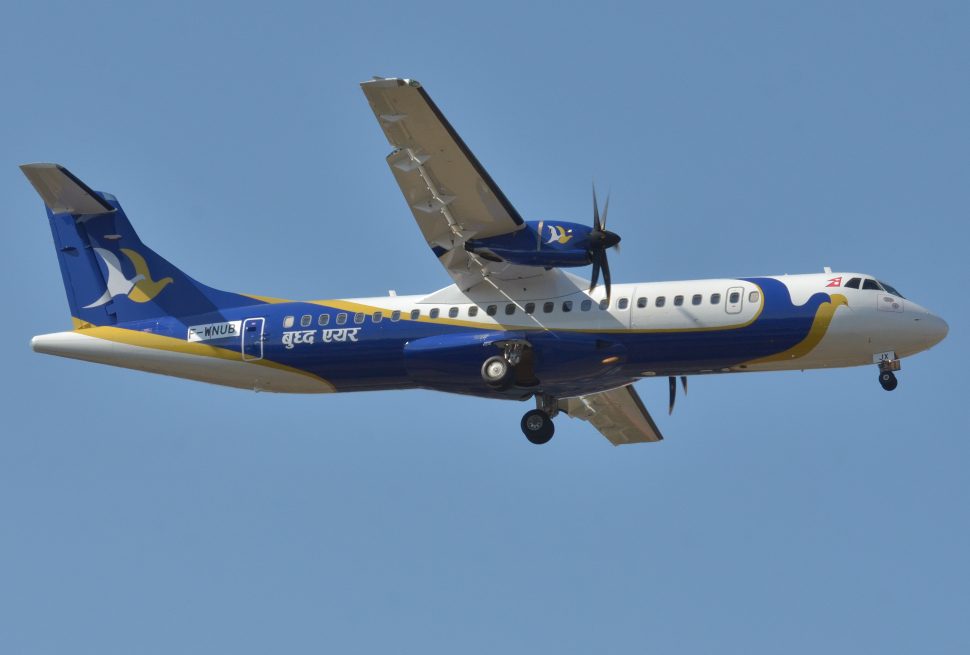
Both Jomsom and Juphal are subject to weather conditions so plan with at least one day’s flexibility. Alternative routes (by jeep) are available in the upper Mustang region which can be a good option to save time on uncertain weather days.
Guides and agencies
A guide is mandatory for all restricted areas, so book through a trekking agency that has experience with monsoon season and know the permit process.
Health and safety
Altitude remains a concern, so be prepared accordingly. Bring a good medical kit, water purification tablets, and insurance that covers altitude rescue and helicopter evacuation if needed. Leeches are not prevalent on the rain-shadow trails as compared to the trails on the southern side.
What to Pack for Monsoon Rain-Shadow Treks?
Lightweight waterproof jacket and trousers
Quick-dry trekking clothes and layers
Good waterproof hiking boots
Sun-hat, sunglasses, and high SPF sunscreen are recommended, as the desert sun can be harsh
Warm-sleeping bag (preferably rated to 0C or lower)
Head lamp, water bottle, water bladder, purification tablets,
personal medication, first-aid kit, blister treatment, etc.
Cash in Nepalese Rupees as ATMs can be unavailable at some points.
A good trekking company should be able to supply you with tents, kitchen equipment, and other necessary gear for camping treks such as the Upper Dolpo.
Tips for a Successful Monsoon Trek in 2026
It is advisable to book permits and flights in advance as monsoon season can see higher demand for popular trekking agencies. It is better to have alternate days built into your itinerary to account for weather disruptions. Depart for your trek early in the day to make use of clear mornings. It is important to enquire about RAP (Restricted Area Permit) costs and solo trekking guidelines when booking with your agency as there can be slight variations.
While many of the areas traversed on these treks are sparsely populated, it is important to respect the local culture as you would in any other country. The inhabitants are largely followers of Tibetan Buddhism or the indigenous Bon religion and so it is important to be mindful of their customs and beliefs. Cover your shoulders and wear appropriate clothing if visiting monasteries or homes, and ask permission before taking photographs. Wherever possible support the local economy by staying at locally-run guesthouses and buying local goods.
Final Thoughts: Monsoon Trekking Guide for 2026
Upgraded permit policies (daily RAP pricing, solo hiking allowed) , less crowded trails, and the opportunity to explore the spectacular dry mountainous region of Upper Mustang , Dolpo and Nar Phu during the rain season makes the year 2026monsoon trekking friendly. While the lower Himalayas are transformed into a lush green wonderland during this season, the rain shadow valleys such as the mysterious Upper Mustang, wild Dolpo and Nar Phu valleys offer the much-needed escapism and adventure. The dry and isolated beauty of these regions is best experienced with fewer crowds, which is a big advantage of traveling there in the rainy season.
So, if you wish to enjoy an extraordinary view during the monsoon, while avoiding the busy trails and soaked valleys that are common during peak season, pick the lesser-known but equally stunning trekking routes in Upper Mustang, Dolpo and Nar Phu. Remember to choose a reliable and experienced trekking agency, prepare well for your adventure, and enjoy the breathtaking views of the Himalayas.
Book your tour now…..
Do you want to experience the most incredible adventure of trekking during the monsoon? Do your research about the available tour packages for the Upper Mustang region, Dolpo or Nar Phu trekking tours. See if there are any available flights in the desired timeframe and contact local agencies about securing the necessary permits. It’s time to enjoy the beautiful sight of the Forbidden Kingdom and isolated wilderness of Dolpo on a clear day!
Frequently Asked Questions
1. Is it really dry in Upper Mustang during monsoon?
Yes, it is one of the driest places in Nepal accessible to tourists during June-August. The region only receives a fraction of the rainfall as compared to the rest of the country.
2 Can solo travelers trek Upper Mustang / Lower Dolpo / Nar Phu in 2026?
Yes, it is possible in 2026. The requirement of a minimum of two people for restricted area permits was abolished in March 2026. However, you will still be required to have a licensed guide from an authorized agency.
3. Which trek is easier for a first-timer during monsoon?
Upper Mustang (shorter version) and Lower Dolpo / Phoksundo Lake are easier options as compared to full Upper Dolpo or high-pass Nar Phu trekking routes.
4. What are the costs like in general?
For Upper Mustang, you can expect to spend USD 1,800 – 2,800 depending on the tour operator, type of accommodation, and activities included. The cost for Dolpo expeditions is higher. It is advisable to clarify what is included and what is not while finalizing the booking.
4. Is it safe to trek in Upper Mustang / Lower Dolpo during monsoon?
The trails in the rain-shadow region are generally safe and dry during the monsoon season. However, there are some variables to consider, such as weather-related delays on the round-trip flights and standard altitude-related concerns.