
Introduction
Far beyond the usual trails, tucked into western Nepal’s high mountains, sits Shey Phoksundo National Park – one of Asia’s least disturbed wild spaces. Spreading wide under open skies, it holds sharp peaks, forests untouched by roads, and a lake so blue it looks painted. Old Buddhist monasteries cling to cliffs here, silent witnesses to centuries of change below. Snow leopards move like shadows through rocky passes, rarely seen, always present in stories told at night. Few people walk these paths, not because they lack interest but because reaching them takes days on foot. The air feels different – thinner, cleaner, carrying voices across valleys without effort. No crowds gather at sunrise, no shops line the trailheads; stillness rules instead. People who live here follow rhythms set long before modern maps existed. Visitors come back changed, though they might not say why – just that something felt real. This place stays hidden not by choice, but simply because it has never needed to be found. Here, adventure means stepping into a world alive with height, solitude, and customs passed down through generations – not just walking rough paths. Beyond rocky ridges and silent meadows lies Phoksundu Lake, its surface catching light like glass. Each turn along the route shows another version of the mountains, shifting with terrain and mood. Those drawn to wild animals, moments caught on film, foot journeys, or ways of life unchanged by time will discover rare glimpses far from crowds.
Far beyond just mountains, this place pulses with life under every rock and leaf. Trails wind through valleys where silence speaks louder than words. Animals move like shadows between trees, unseen but always felt. Each step along the paths tells a story older than memory. Culture here does not perform – it simply is, steady as breath. Efforts to protect what remains grow quietly, like roots beneath soil. Visitors arrive with questions; they leave carrying answers they never expected.
Shey Phoksundo National Park basics
Far beyond the usual paths in western Nepal sits a vast stretch of wild land, tucked into the distant Dolpo zone. This place wears the title of biggest national park in the nation without trying – spreading across 3,555 square kilometers of raw mountain scenery. Back in 1984, it was set aside, rising sharply from about 2,100 meters up past 6,800. From green river basins to high-altitude deserts cut by wind, life changes shape with every climb. Phoksundo Lake lives here, glowing an odd blue – the deepest lake of its kind in the country. Old ways linger too, shaped by centuries-old ties to Tibetan traditions. Wildlife moves through quietly, thriving where few come close. Most people start their way forward on small planes leaving behind Kathmandu’s noise, landing at thin-air strips near the edge of quiet.
Why Shey Phoksundo National Park Is Unique in the Himalaya?
Not many places in the Himalayas shift so sharply between life zones. From green river basins up into barren lands shaped by Tibet’s reach, the land changes fast. Such extreme shifts create room for countless plants and animals. Each zone holds its own quiet rhythm of survival.
One moment you’re under thick pines, then suddenly sheer rock towers above. Rivers thunder through narrow gaps before vanishing into still highland pools. This place lacks the roads and signs found elsewhere, so it feels untouched. Homes dot the slopes far apart from one another. Footpaths wind without crowds. Darkness falls clean, full of stars, with no glare from lamps below.
What stands out just as much is how deeply rooted the culture remains here. Life in Dolpa unfolds through customs where Tibetan Buddhism mixes with old Bon beliefs, kept alive in routines barely altered across hundreds of years.
Landscape Shapes Sanctuary
The Turquoise Wonder of Phoksundo Lake
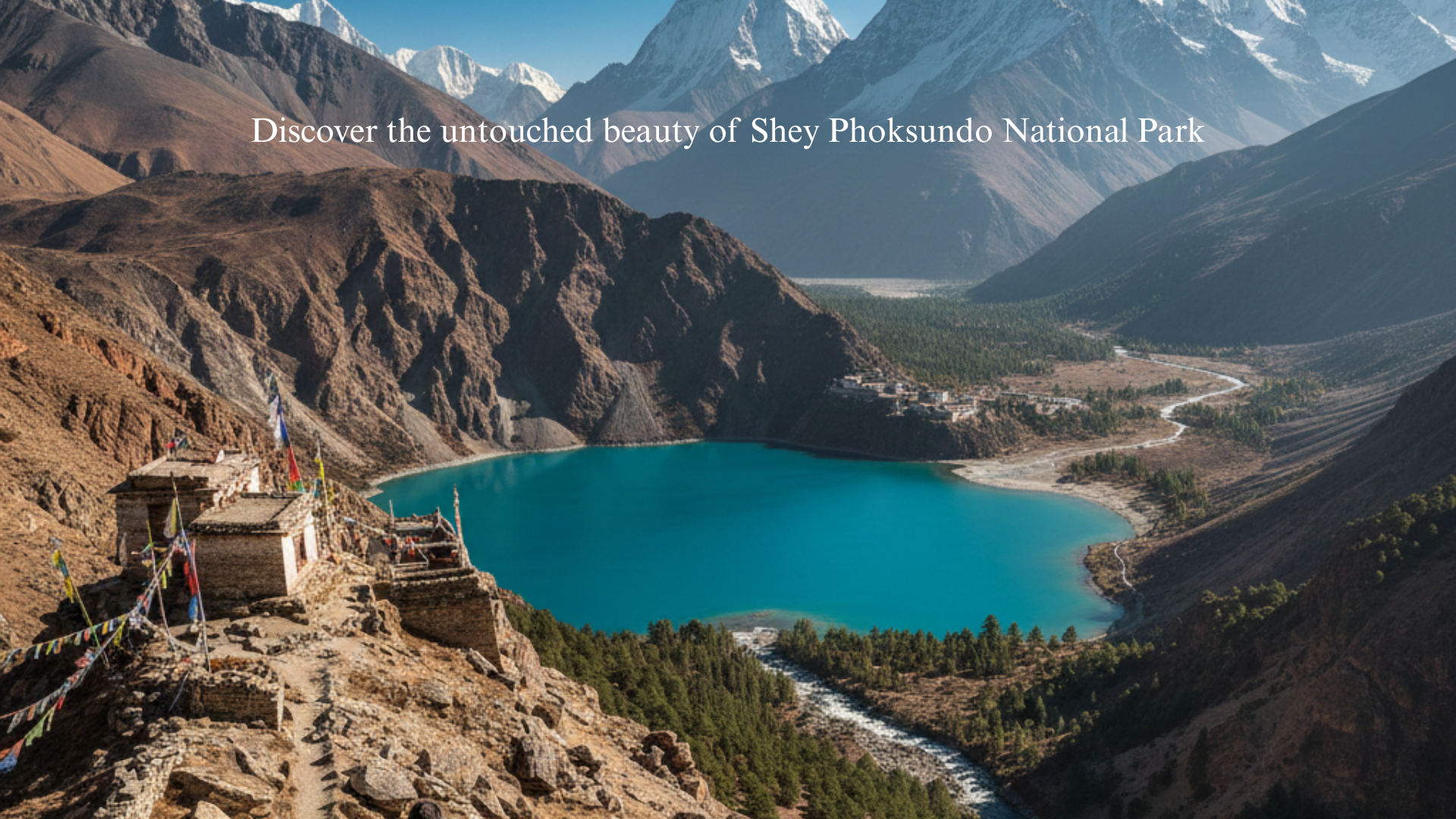
Around here, it’s the lake that catches your eye first – bright blue, clear as glass. High rocky walls and white-topped mountains wrap around it tight. Seen from up on the ridgelines, the whole scene feels like something painted. Nothing swims in it, hardly any plants grow near the edges. That clean emptiness makes it stand out even more.
High Himalayan Desert Landscape
Far past the water, things shift – rock faces twisted by wind cut sharp against the sky. Ridges worn thin stretch out like old bones, shaping hollows that feel closer to Tibet than to Nepal’s leafy east. Air here carries little moisture, leaving room for emptiness. Quiet sits heavy across broad stretches of land.
Deep river gorges and forested valleys
Deep valleys hold pine woods, cascading falls, along with narrow gorges carved by rivers. Wildlife depends on these zones, while hikers pass through shifting landscapes all in one go.
Animals and plants in Shey Phoksundo National Park
High up where thin air bites, ancient rhythms still rule. Cliffs sliced by wind cradle life few ever witness. Snow leopards move like shadow across stone, built for ice and silence. Herds of blue sheep climb jagged backs of mountains, feeding sharp-toothed hunters below. These grazers keep balance, linking rock to sky through hunger and survival. In wooded hollows, musk deer step lightly, tahr cling sideways to steep ground, red fox vanish into mist. Above, great wings circle – griffons, lammergeiers, snowcocks – reading thermals we cannot feel. Few people live here, those who do walk softly, lives woven into seasons and scarcity. Distance from noise and rush leaves room for wild things to simply be.
Cultural Heritage of the Dolpo Region
Walking here means walking alongside a people shaped by mountains and sky. Not just monks chanting but villagers honoring spirits older than books in their daily ways. Though remote, life pulses with rituals rooted deep in soil and season. Beliefs flow like rivers – unchanged yet always moving through rock and prayer.
Clusters of stone homes gather near monasteries, which act as hubs for worship and community life. Along footpaths, prayer flags wave in the wind while carved mani stones edge the routes people walk. Seasonal changes arrive with celebrations that shape the rhythm of days. Living gently within the natural world matters deeply here – an outlook that quietly mirrors today’s environmental values.
Footpaths worn by old caravans still trace these valleys, connecting high mountain passes to western plateaus. Scattered stone houses with slanting roofs stand like echoes of long journeys made centuries ago.
Trekking Adventures in the Park
Walking on foot opens up this huge reserve most fully. Some paths follow gentle village trails, others push through tough mountain crossings.
Phoksundo Lake Trek
Through trees and rushing falls, the path moves past old villages toward a sudden glimpse of the lake. Called among the west Nepal region’s finest walks, it unfolds slowly under open skies.
Far from busy trails, this journey climbs steep mountain paths before slipping into quiet valleys untouched by most travelers. Each step pulls you deeper into raw, unbroken nature.
Footsteps trace an ancient path where thin air meets weathered stone. Among towering peaks, old prayer halls rise quietly. A journey unfolds slowly – part devotion, part discovery. Mountains shape each step forward.
When to Go
When spring arrives, days grow mild. Between March and May, flowers open across high meadows while animals move more freely as ice retreats uphill. Cooler breezes return when September begins. Trails stay firm then, cleared of summer dampness, with skies often wide and sharp. Autumn stretches into November, offering steady light and few clouds above ridgelines. Winter brings deep frost; roads freeze shut, making movement slow and steep paths harder to follow. Rain falls below during monsoon time, yet lands beyond the peaks stay mostly parched. Even so, getting supplies through takes longer once rivers swell and bridges sway. Clear spells appear between storms, still travel plans shift without warning.
Conservation Importance
High up in the mountains, this protected area helps keep rare plants and animals safe. Instead of just fences and rules, people who live nearby join efforts to watch animal movements. Protecting space for nature means paying attention to how creatures behave year after year. Local knowledge mixes with careful observation to support long-term balance.
Folks who live nearby take part in efforts to protect nature without giving up their usual ways of making a living. Because tourism brings income, people have reason to keep the land healthy instead of harming it.
Home to rare wildlife, the park supports worldwide conservation work. Mountain habitats here respond quickly to changing climates, adding weight to its role. Protection within these borders helps balance fragile ecosystems elsewhere. Species on the edge find some stability in this rugged space. Efforts made locally echo across continents, quietly making a difference.
Essential Travel Information
Getting to this faraway Himalayan park means thinking ahead because it is protected and has few facilities. Permits must be obtained beforehand, while guided tours through authorized operators keep travelers safe and within legal rules. Staying overnight usually happens in modest teahouses or local homes, though tents become essential when venturing deeper into isolated areas. Food served tends to be plain yet filling, designed carefully for the thin mountain air. Some trails demand steady stamina, others push limits – condition matters when paths climb high. As temperatures shift without warning, wearing adaptable layers makes a difference out there. Those who ready their bodies slowly for thin air tend to move better up top. A solid pack, sturdy boots, and checking forecasts shape how smoothly days unfold.
Quiet Trails Hidden Streams Old Trees
Hidden among the high peaks, Shey Phoksundo wraps wild terrain, ancient traditions, and rich wildlife into one quiet space. With each step through its valleys comes a chance to walk lightly – leaving room for nature to thrive, villages to endure.
Here, getting around isn’t focused on comfort or ease – instead, it leans into realness. Beauty shows up slowly, asking only that you wait. Quiet moments stretch out under open skies. You feel close to trees, water, earth when distractions fade.
Conclusion
High up in the Himalayas, Shey Phoksundo National Park holds space like few places still do. The lake shines bright blue, surrounded by cliffs that rise without warning. Where animals move quietly through remote valleys, human life follows old rhythms. Instead of crowds, there is open air, distance, and quiet that settles deep. Journeys here unfold slowly, marked more by sky than signposts. Tradition walks alongside footpaths, present but never forced. Scale changes everything – horizons stretch while time seems to pause.
Wandering through this far corner feels less like walking, more like stepping into the wild heart of the mountains. A quiet pulse hums beneath the silence up there.