

Introduction
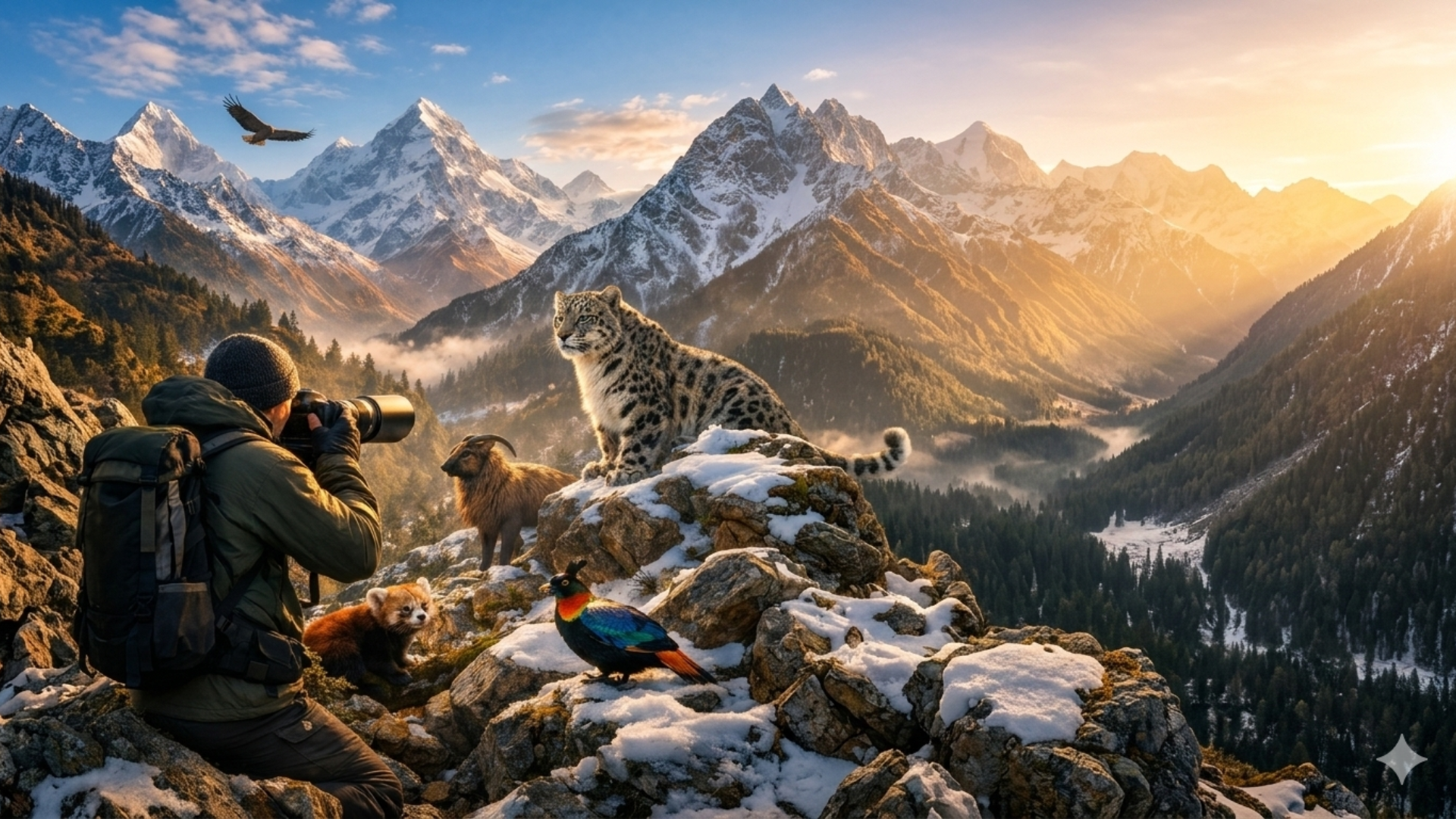
Best Camera Gear for Himalayan Wildlife Photography Nepal of wild animals in the Himalayas test both skill and patience like few others. Across sweeping peaks where storms arrive without warning, altitude wears down even strong hikers – yet life moves quietly through the stone and ice. Spotting a snow leopard means waiting near jagged cliffs, eyes scanning cracks in the rock, hoping for movement at dawn. Bright feathers flash when monals dart between trees, sudden bursts of color against gray terrain. A solid camera setup handles freezing mornings, bumpy trails, distances that stretch beyond zoom lenses. Without dependable tools, moments vanish before fingers touch shutter buttons. Sharpness matters just as much as survival out there, maybe more. Gear must keep up when bodies slow down. Each photo taken becomes proof you were present despite odds. Far-off creatures come into frame when glass stretches beyond normal reach, pulling details close without stepping near. Sharp focus locks on motion thanks to today’s lightweight bodies built for speed and response. Tough parts hold up where weather bites hard and paths turn rough underfoot. Distance keeps subjects calm even as precision follows every sudden leap or flight.
Wildlife in the Himalayas shows up without warning, distances are vast, so being ready matters most. Early light creeps slowly across ridges – this is when animals stir, requiring tools that work quietly even under dim skies. Musk deer step lightly through mist, tahr cling to steep rocks, red pandas vanish into trees, while snow leopards remain ghosts among boulders. Long waits happen on frozen ground where cold drains batteries faster than expected. When movement breaks the stillness, hesitation ruins everything; only steady setups deliver clean frames. Choices about what to bring shape every outcome: body weight affects endurance, lens reach defines possibility, tripod stability fights wind shake. Conditions stretch limits – dust invades joints, humidity fogs viewfinders, sudden storms soak backpacks. Success hides in details few talk about: how a shutter button feels with gloves, whether a screen stays visible in glare, if straps dig during climbs. Each piece serves survival as much as image quality – not just capturing life, but enduring it alongside. Gear becomes an extension of patience out there, nothing more, nothing less.
Himalayan wildlife photography conditions explained
Frost bites more than skin – it tests every piece of gear. High up where air thins, machines sputter if not built tough. Sudden storms roll in without warning, drenching trails under gray sheets. Gears need armor against wetness, grit, cold – anything nature hurls. Not all gadgets survive when wind howls through rocky passes. Animals in the Himalayas stay on high alert, hard to get near. Not like safaris where creatures might linger close to cars, here they stick to distant ledges, thick woods, or open mountain fields. Because of that gap, shooters need big glass – think 400mm up to 600mm, sometimes more. Zooming in tight means snapping sharp shots without creeping too close, keeping space respectful yet clear.
Moving around matters a lot. Reaching certain spots in the Himalayas often means walking for days, sometimes longer. Hauling heavy bags across rough paths and isolated areas makes light tools necessary. A photographer might pick mirrorless cameras – they weigh less yet deliver sharp results. Tough builds that block windblown grit and dampness help too when storms roll in mid-climb.
Early morning light shifts fast up there. One moment it’s sharp sunshine, next thing a wall of fog rolls in. Animals tend to move most at twilight hours, when shadows stretch long across valleys. Picture taking gets tough as colors fade into gray tones then dark. A camera that works well with low light makes a difference out on those slopes. Fast glass lets you snap sharper shots before critters vanish into brush.
Selecting a Camera Body for Wildlife Use
Inside every wildlife photo kit beats a camera body. When aiming at creatures across the Himalayas, what matters most shows up in quick focus, rapid shot streams, clean picture detail, along with long-lasting power. Animals sprint, leap, vanish – timing shrinks to mere blinks. A single second might hold everything worth saving.
Wildlife photography changed when mirrorless models arrived on the scene. Take the Nikon Z9 or the Sony A9 III – these tools stand out thanks to smart focusing tech and rapid burst modes. Shooting several shots each second means wings mid-flap stay frozen, not blurred. Focus doesn’t wander; it sticks to creatures like glue, adjusting as they move. Sharp results happen more often simply because the system keeps up without lagging behind.
The Canon EOS R7 stands out too, delivering sharp autofocus along with fast shot sequences while staying light enough to carry far. When you’re hiking steep trails, gear that doesn’t weigh you down matters – this fits the moment well. A tighter sensor gives these APS-C models an edge, stretching lens range without extra bulk, pulling far-off creatures into clearer view.
A tough build matters just as much. Out in the wild, many pros choose gear sealed against rain, built with lightweight metal frames, because sudden storms hit hard up there. Such details keep things running when winds blast or snow falls without warning.
When you’re out hiking far from power sources, how long your battery lasts really matters. Cold weather tends to drain them fast, so bringing extras makes sense – just in case. Having a few backups means you won’t get caught off guard when temps drop.
Telephoto lenses matter most for wildlife
Wildlife shots depend heavily on glass, sometimes more than the camera itself. To get those Himalayan moments, distance matters most – that is why long telephotos come into play. Zooming in tight lets you frame shy creatures far away, keeping space between you and them. Getting close enough without being there defines much of the craft.
Wildlife shooters often reach for the Sony FE 200-600mm f/5.6-6.3 G OSS. Because it stretches vision so far, distant creatures come through clear. Photographers aiming at eagles, bears, or deer rely on its zoom strength. Sharpness holds up even when filling the frame with small moving targets. Long glass of this kind fits best where getting close isn’t possible – or wise.
A solid choice? The Nikon NIKKOR Z 180-600mm f/5.6-6.3 VR. Built-in vibration reduction keeps images steady, even when you’re not using a tripod. Because of its extended zoom, it pulls faraway subjects – like wild animals in high mountain areas – much closer. Think herds on rocky slopes or a lone predator moving through mist.
Outdoors, this lens handles rough conditions without slowing down. When light gets tricky, it still keeps images steady thanks to strong internal stabilization. Photographers on Canon mirrorless systems often pick it for long reach and solid build. Weather won’t stop it – dust and damp barely make a difference. Mountains, forests, sudden rain – it just keeps working. Built tough, meant to last through real use.
A specialist wildlife shooter might reach for something like the Sigma 200-500mm f/2.8 EX DG – built for extreme distance work with a wide-open aperture. Such gear appears almost bulky by default, stretching far beyond average size. Stability becomes tough without support since weight stacks up quickly across long stretches of glass. Tripods tend to enter the workflow because handheld attempts rarely hold steady.
Few things beat a long lens when you’re waiting on an animal that won’t come close. Most folks shooting nature scenes lean toward glass around 400 to 600 millimeters. That stretch pulls faraway subjects near without turning into a burden on long hikes. Weight matters just as much as zoom when trails get rough.
Must Have Gear for Shooting Animals Outdoors
When shooting wildlife in the Himalayas, having just a camera and lens isn’t enough. Tripods steady long telephotos when light fades fast. A rain cover keeps moisture off electronics during sudden storms. Extra batteries last longer if kept warm under layers. Memory cards fill quickly with rapid bursts of shy animals. Filters reduce glare on snow without slowing shutter speed too much. Gloves that allow fingertip access help with delicate dials in freezing air.
Standing still matters when chasing distant animals through a lens. Heavy glass tires arms fast, making support essential. Stability comes easier with a solid base that holds firm across uneven ground. Light on the back but tough under stress – carbon fiber fits wild paths well.
A different option that helps is the gimbal head. With it, handling large telephoto lenses becomes easier during motion shots of animals. Instead of struggling with weight, users pivot naturally through movement. Often seen in bird photography, these supports suit quick forest subjects too.
Storage options matter just as much. When capturing wildlife, long trips mean snapping countless shots, particularly with rapid-fire settings on cameras. Bringing several large-memory cards means missing nothing at key times. Running out of space becomes unlikely.
Fitted for rough conditions, camera bags made for shooting outside hold up when skies turn wet. Built tough against snow plus grime, weather-ready packs guard equipment through shifting terrain. Straps mold to shoulders, easing strain across miles of uneven ground.
Hard Weather Mountain Safety Equipment
When winter grips the high mountains, keeping cameras safe becomes a top priority for anyone chasing wild animals through the lens. Snow finds its way into everything, while grit rides the wind, soaking in alongside sudden downpours and biting frost – all eager to ruin delicate machinery without warning.
Starting out in bad weather gets easier when gear holds up. Built tough, pro-grade cameras often ignore splashes, just like their lenses shrug off grit. Rain drizzles down, snow piles on – work keeps going anyway. Protection begins right there, tucked into every seal and shield.
A shade around the lens helps block harsh light while shielding glass up front from bumps. Instead of risking damage, many attach clear filters that guard against scrapes or grime. Bouncing bright rays off angle keeps images cleaner too.
When it gets cold, cameras sometimes struggle. Power drops quicker since chilly air weakens battery life, which means bringing backups is smart – tuck them under layers until needed. Gear stays safer in padded cases made for frosty settings. Heat loss slows down if the kit sits shielded from biting winds.
Extra Camera Equipment for High Mountain Trips
Deep in the Himalayas, snapping wildlife means trekking far from roads. Because of this, extra equipment becomes essential – not just helpful. Some tools keep you safe when storms hit without warning. Others make work smoother when light fades fast. Carrying more weight pays off when trouble finds you miles from help.
Out there beyond the trees, binoculars make it easier to catch sight of animals far off. Spotting a flicker on a ridge? That’s when most wildlife shooters start glassing hills and hollows.
Out in the wild, far from outlets, a compact power bank might keep your gear running. When sunlight’s all you’ve got, a solar charger steps in – silent, steady. Imagine snapping elk at dawn, then juicing up your phone by noon. Even deep inside untouched forests, these gadgets bridge gaps no grid ever reaches.
A button pressed from a distance can snap the photo. When hands stay away, the camera stays steady, so pictures come out clearer.
A sudden downpour might not ruin your gear if you’ve got a cover made for weather. These lightweight shields slip into any bag, ready when storms show up out of nowhere.
Camera Settings and Techniques for Wildlife Photography
A good photographer knows tools matter less than knowing how to work them. Without smart choices behind the lens, even top-tier cameras fall short when shooting animals in nature.
Picture sharpness often depends on how quickly the camera clicks. When animals move, a split-second timing stops blur in its tracks. Photographers aiming at birds pick settings like 1/1000 second – or quicker – to catch motion cleanly. Speed matters most when life won’t sit still.
When a subject moves, staying sharp matters – cameras handle that by adjusting focus nonstop. Some newer models spot animals on their own, locking focus without needing direction.
When you need fast action caught just right, burst mode helps without slowing down. Instead of one still image, it snaps several each second. That means better odds at freezing something quick – like wings lifting into air or a fox leaping between stones.
Picture taken in RAW keep every bit of info light hits the sensor. These files give room to tweak brightness, tones, sharpness later – without messing up clarity. Editing becomes smoother when nothing gets thrown away at capture.
Top Spots for Photographing Wildlife in the Himalayas
Home to rare creatures, the Himalayas hide wild corners few ever see. Where mountains rise high, protected lands keep nature running its course – cameras often catch what words cannot.
High up in Nepal, you will find Sagarmatha National Park along with Langtang National Park – both packed with wild animals and sharp peaks that catch your eye. Snapshots here might include a Himalayan tahr caught mid-step, while nearby, a musk deer freezes under quiet trees. Red pandas sometimes appear at dawn, peeking through thick moss. Birdwatchers often leave full of names they barely knew existed. Each turn offers something unscripted.
High up in western Nepal, Shey Phoksundo National Park catches attention fast. Far from busy roads, this quiet stretch holds untouched valleys where animals roam free. One such creature – the snow leopard – moves unseen through rocky cliffs and thin air. Wild beauty defines every corner here, shaped by wind, stone, and silence.
Away up in the cold mountains, Ladakh and Himachal Pradesh draw photographers hoping to catch a glimpse of snow leopards through their lens. Meanwhile, deep green stretches across Bhutan where ancient trees shelter rare animals unseen elsewhere.
Conclusion: Best Camera Gear for Himalayan Wildlife Photography
Snapping pictures of animals in the Himalayas tests your skills yet pays off in surprising ways. Those towering peaks and elusive creatures? They open doors to one-of-a-kind shots. Still, showing up unprepared means missing out – having solid equipment matters just as much as knowing where to look.
Starting high up on a ridge, good gear choices shape how well photos turn out when animals move fast through cold air. When weight stays low but toughness holds strong, walking far becomes easier even if storms roll in without warning. Equipment that keeps working despite wind or snow means fewer worries once you’re miles from help.
Finding great shots here takes more than luck. A quiet step matters just as much as a good lens. Watch how creatures move through high meadows, then wait. Some mornings bring golden light on eagle wings above pine trees. Other times reveal paw prints in fresh snow near rocky cliffs. Moments like these stay long after the trip ends. Few places stir the eye quite like these peaks do.


