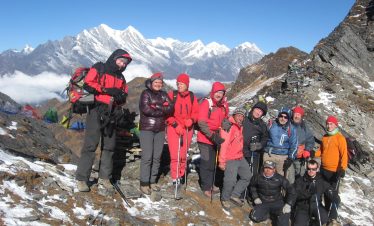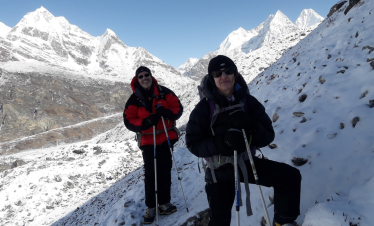

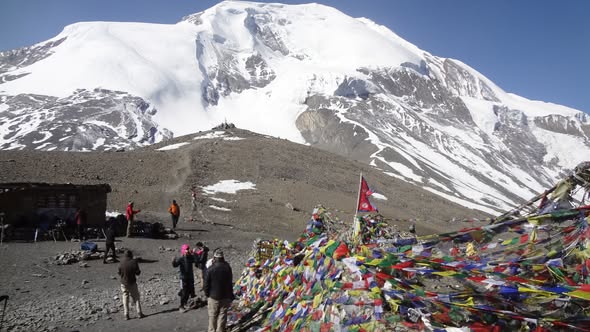
The Tilicho Lake and Mesokanto La Trek is a 9-day journey that takes you off the busy Annapurna Circuit trail and into the quiet, wild side of the Annapurna region. You begin with the familiar villages of the Manang valley, with their apple orchards, prayer flags and old stone monasteries. Then you turn toward Tilicho Base Camp, where the path narrows and the mountains feel closer and bigger. At 4,920 metres, Tilicho Lake waits for you, one of the highest lakes on earth, glowing turquoise against walls of snow and rock.
The trek is a true crossing. After the lake, you cross the Mesokanto La Pass at 5,300 metres, with sweeping views of Dhaulagiri, Tukuche Peak and the Annapurna giants, and then descend through the dry, windswept landscape toward the Kali Gandaki valley and Jomsom in Mustang. In one trip you move from green river valleys to high alpine desert, from Gurung and Manangi villages to Tibetan-influenced Mustang.
This is not a casual walk. Two nights are spent in tented camps at high altitude, some trail sections cross landslide-prone slopes, and the pass day can last 7 to 9 hours. But with a built-in acclimatization day at Manang, a steady pace, and experienced guides who know every turn of the trail, it is a rewarding adventure for fit trekkers who want something more remote than the standard Annapurna Circuit. If you have walked at altitude before and love the idea of camping beside a glacial lake, this trek was made for you.
Highlights
- Stand beside Tilicho Lake at 4,920 m, one of the highest lakes in the world, and camp just beyond its shore.
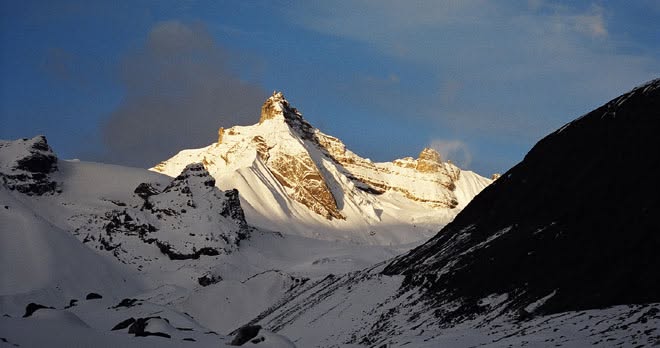
- Cross Mesokanto La Pass at 5,300 m and enjoy 360-degree views of Dhaulagiri, Tukuche Peak and the Annapurna range.
- Walk through the upper Manang villages of Ghyaru and Ngawal, where mani walls, prayer flags and old monasteries line the trail.
- See Paungda Danda, the huge curved rock wall above Upper Pisang that local people hold sacred.
- Spend a full acclimatization day in Manang, with short hikes to Gangapurna Lake, Chongkor Viewpoint or Bhojo Gompa.
- Leave the main Annapurna Circuit for the remote Tilicho trail, with dramatic cliffs and far fewer trekkers.
- Descend into the Kali Gandaki valley, the deepest gorge in the world, and finish in the Mustang town of Jomsom.
- Fly or drive from Jomsom to Pokhara, with views of Dhaulagiri and the Annapurna range.
Mesokanto La Pass Itinerary
Your adventure begins early in the morning with a long and scenic drive from Kathmandu toward Chame, the headquarters of Manang District. The road follows rivers, climbs past terraced fields and waterfalls, and gives you your first glimpses of distant Himalayan peaks. As you gain height, the road winds through green forest and rocky ridges beside the Marsyangdi River. The drive is long and a little bumpy in places, so keep your camera ready and a jacket within reach. By the time you arrive in Chame, the air is crisp and cool, and Lamjung Himal shines above the village. After dinner at your tea house, take a short walk around town and rest well.
Drive time: about 9 to 10 hours by bus or jeep. Stay: tea house. Meals: breakfast, lunch and dinner.
Today you begin walking, heading north through the deep Manang valley. The trail passes apple orchards and quiet pine forests before Paungda Danda comes into view, a huge curved rock wall that rises like a giant slate above the valley and is sacred to the local people. Stop here for a while and take it in. From there the path climbs gently to Upper Pisang, a picturesque village of stone houses perched on the hillside, with fine views of Annapurna II and Annapurna IV. In the evening, you can visit the village monastery, which looks over the whole valley.
Walking time: about 5 hours (12 km). Stay: tea house. Meals: breakfast, lunch and dinner.
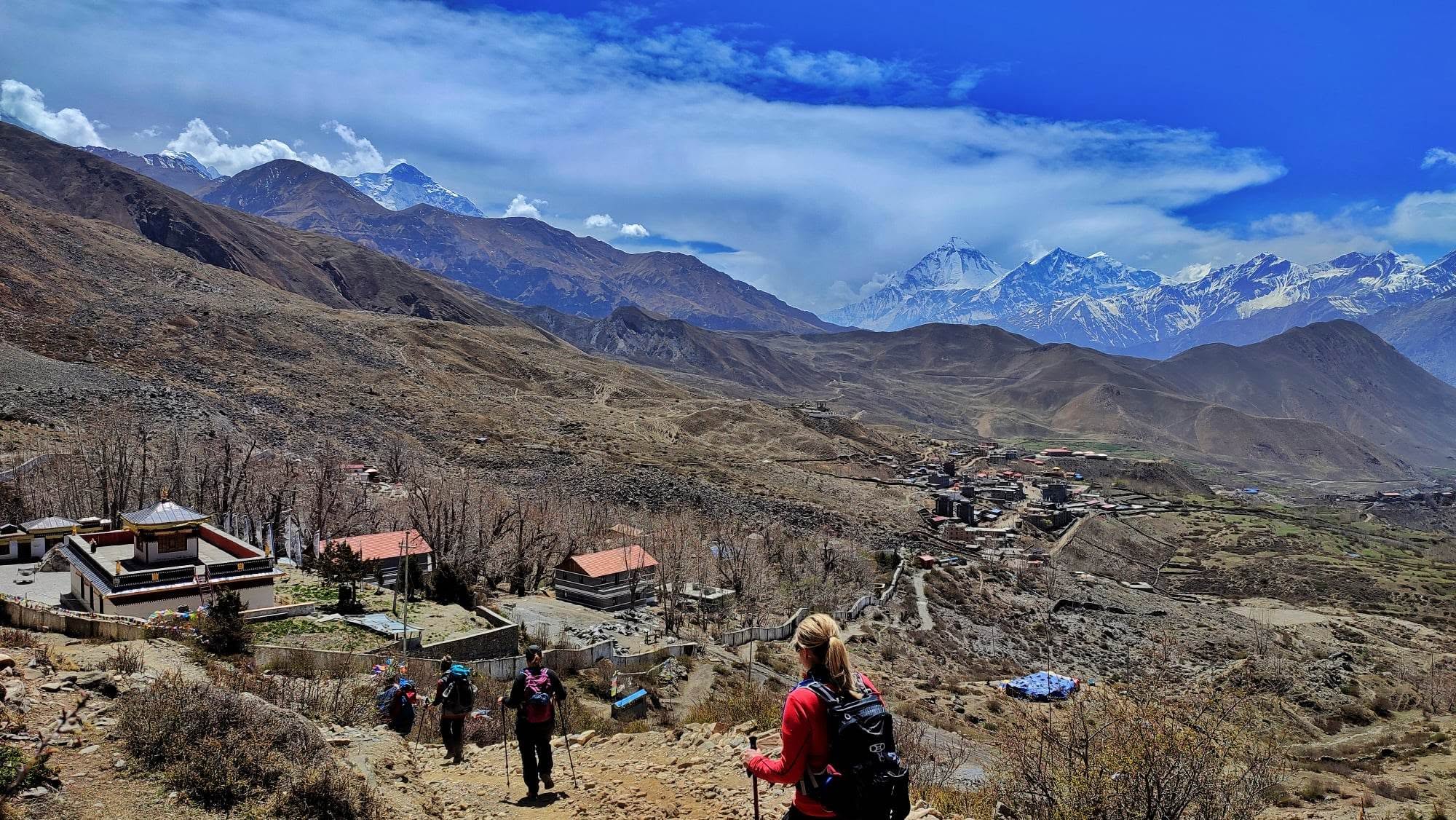
The upper trail through Ghyaru and Ngawal is one of the most beautiful stretches of the whole Annapurna region, with views of the Annapurna range at almost every turn. You walk through pine forest and high farmland, past prayer flags fluttering in the wind and long, weathered mani walls. The old villages give you a glimpse of Tibetan-influenced mountain life. The air becomes thinner as you approach Manang, an important acclimatization stop surrounded by snow-covered peaks. Walk slowly, drink plenty of water, and enjoy the scenery rather than the speed.
Walking time: about 6 hours (15 km). Stay: guest house. Meals: breakfast, lunch and dinner.
Today is a well-earned rest day, and an important one. Your body needs time to adjust to the altitude before heading to the high camps. Spend the morning exploring Manang, chatting with local people, and visiting small shops and cafes. If your energy is good, take a short hike to Gangapurna Lake or climb to the viewpoint above the village. Optional hikes to Bhojo Gompa or Chongkor Viewpoint help your body adapt and reward you with wide views of the Annapurna massif. Remember the old trekking rule: climb high, sleep low.
Stay: tea house. Meals: breakfast, lunch and dinner.
The trail today is rugged and exciting. You leave the main Annapurna Circuit and enter a much more remote part of the region. The path crosses landslide-prone slopes and narrow cliff sections, so you need to move with care and follow your guide's instructions. Step by step, you arrive at Tilicho Base Camp, set below towering rock faces. It is a quiet, wild place, and the nights are cold. Go to bed early, because tomorrow starts before sunrise.
Walking time: about 6 hours (13 km). Stay: tea house. Meals: breakfast, lunch and dinner.
You start early for the climb to Tilicho Lake, one of the highest lakes in the world. The morning walk is steep but spectacular, and the reward is a turquoise lake framed by snow and rock, with a deep silence you will remember. Spend some quiet time at the shore. Then you continue to your campsite beyond the lake, where your crew sets up tents for the night. It is cold up here, so layer up, drink hot tea, and watch the stars come out.
Walking time: about 4 hours (12 km). Stay: tented camp. Meals: breakfast, lunch and dinner.
This is the hardest and the most adventurous day of the trek. You climb steeply to Mesokanto La Pass at 5,300 metres, and the effort is rewarded with 360-degree views of the surrounding peaks. Take your time, rest often, and keep a steady rhythm. After the pass, you descend toward Yak Kharka, where your tented camp is set up and a warm meal waits for you. The day is long, and everyone sleeps well tonight.
Walking time: about 7 to 9 hours (14 km). Stay: tented camp. Meals: breakfast, lunch and dinner.
After days in remote wilderness, you walk down toward Jomsom, the busy town of Mustang. The trail crosses alpine meadows and barren hills before entering the Kali Gandaki valley, where the wind is strong and the landscape wide and open. Arriving in Jomsom feels like returning to civilization: hot showers, comfortable beds and good food. Celebrate your achievement with your team this evening.
Walking time: about 5 hours (12 km). Stay: tea house. Meals: breakfast, lunch and dinner.
Depending on the weather, you take either a short scenic flight or a longer drive back to Pokhara. The flight gives you aerial views of the Dhaulagiri and Annapurna ranges. The drive winds through the Kali Gandaki gorge, one of the deepest canyons in the world. In Pokhara you can relax by the lake, and your trek officially ends here.
Meals: breakfast.
Includes/Excludes
Cost Includes
- • Airport pickup and drop-off by private vehicle.
- • Private bus or jeep from Kathmandu to Chame.
- • Flight or private drive from Jomsom to Pokhara, as the weather allows.
- • All meals during the trek (breakfast, lunch and dinner) with tea or coffee.
- • Tea house accommodation on twin-sharing basis, plus tented camp with tents and sleeping mats at Tilicho Lake and Yak Kharka.
- • Experienced, licensed trekking guide, and porters (one porter for every two trekkers).
- • Guide, porter, cook and camp crew salaries, food, insurance, equipment and accommodation.
- • Annapurna Conservation Area Permit (ACAP) and TIMS card.
- • Restricted area permits, if required for the route.
- • First-aid kit.
- • All government taxes and official service charges.
- • Trip completion certificate.
Cost Excludes
- • International flights to and from Nepal, and the Nepal entry visa fee.
- • Hotel in Kathmandu and Pokhara before and after the trek, and meals in the cities.
- • Travel and rescue insurance, which is compulsory, including helicopter evacuation cover up to 5,300 m.
- • Personal trekking gear, which can be rented or bought in Kathmandu.
- • Drinks, bottled water, hot showers, battery charging and wifi at tea houses.
- • Extra costs caused by flight delays, landslides, road blockages, weather or other events beyond our control.
- • Tips for guide, porters and crew (customary and appreciated).
- • Anything not listed under Cost Includes.
Equipment Checklist
Pack light but smart. Temperatures at the high camps can drop well below freezing at night, so warm layers and a good sleeping bag matter. Items marked “rent” are easy to hire in Kathmandu.
Clothing
- Moisture-wicking base layers, top and bottom
- Fleece or light insulated jacket
- Down jacket (warm, rated for -15 degrees C)
- Waterproof and windproof jacket and trousers
- 2 to 3 trekking trousers and 3 to 4 t-shirts
- Warm hat, sun hat or cap, and a buff or scarf
- Lightweight and heavy gloves
- Thermal underwear and warm trekking socks (4 to 5 pairs)
Footwear
- Broken-in waterproof trekking boots with good ankle support
- Light camp shoes or sandals
- Gaiters (useful on the pass)
Gear
- Sleeping bag rated for -15 degrees C (rent)
- Daypack, 30 to 40 litres, with a rain cover
- Duffel bag for porters (provided or rented)
- Trekking poles
- Headlamp with spare batteries
- Sunglasses with UV protection (glacier glasses recommended)
- Water bottles or hydration bladder, 2 to 3 litres
- Microspikes for icy sections, if requested by your guide
Personal items
- Sunscreen (SPF 50) and lip balm
- Toiletries, quick-dry towel and hand sanitizer
- Water purification tablets
- Personal medicines and a basic first-aid kit
- Power bank, camera, and a universal adapter
- Passport, permits copies, insurance papers and cash in Nepali rupees
- Snacks such as nuts, chocolate and energy bars
Essential information
Best time to trek. Spring (March to May) brings blooming rhododendrons and clear skies, and autumn (September to November) offers the most stable weather and the sharpest mountain views. Winter is very cold and the pass may be closed by snow. The monsoon (June to August) is not recommended for the high sections.
Difficulty and fitness. This is a strenuous trek. You will walk 4 to 9 hours a day, camp at nearly 5,000 metres, and cross a 5,300 metre pass. Good cardiovascular fitness and some previous high-altitude or multi-day trekking experience are strongly recommended. Start training at least 6 to 8 weeks before departure with hiking, stair climbing, running or cycling.
Altitude and acclimatization. The itinerary includes a full rest day at Manang, but altitude sickness can affect anyone, whatever their fitness. Walk slowly, drink 3 to 4 litres of water a day, avoid alcohol, and tell your guide at once if you feel headache, nausea, dizziness or unusual tiredness. Descending is the best treatment, and your guide will make that decision for your safety.
Permits. You need an Annapurna Conservation Area Permit (ACAP) and a TIMS card, and possibly a restricted area permit depending on the route and current rules. We arrange all of these for you. Please send a clear passport copy and passport-size photos before departure.
Accommodation and food. Tea houses offer simple twin-sharing rooms with shared bathrooms, and dining halls serve dal bhat, noodles, soups, eggs, pasta and hot drinks. At the two tented camps, our crew cooks fresh hot meals and provides tents, mats and a dining tent. Facilities are basic at altitude.
Safety and weather. Some trail sections near Tilicho are exposed and landslide-prone. Weather can change quickly, and snow or strong winds may force a change of plan. Your guide will always put safety first, and the schedule may be adjusted. Please keep one or two spare days in Nepal after the trek for delays.
Travel insurance. Insurance covering high-altitude trekking up to 5,500 metres, medical treatment and helicopter evacuation is compulsory. Please send us a copy of your policy before the trip starts.
Electricity, network and money. Charging is available at most tea houses for a small fee, but not at tented camps, so bring a power bank. Mobile and wifi signal is limited. Carry enough Nepali rupees, because there are no ATMs along the trail after Manang.
Frequently Asked Questions
How difficult is the Tilicho Lake and Mesokanto La Trek?
It is a strenuous trek. The long days, the high camps and the 5,300 metre pass make it harder than the standard Annapurna Circuit. If you are fit and have some trekking experience, you can do it with the right preparation.
Do I need previous trekking experience?
Previous multi-day trekking experience, ideally at altitude, is strongly recommended. Complete beginners should consider an easier trek first, or contact us so we can suggest a better fit.
What is the risk of altitude sickness?
The risk is real above 3,500 metres. The itinerary includes an acclimatization day at Manang, and your guide checks everyone daily. Walk slowly, drink plenty of water, and report symptoms early.
What happens if the Mesokanto La Pass is closed by snow?
If weather makes the pass unsafe, your guide will advise on the safest option, which may be returning to Manang by the same route. Safety always comes before the schedule. This is another reason travel insurance is required.
Is the Tilicho trail dangerous?
Some sections near Tilicho Base Camp are narrow and exposed to rockfall, especially after rain. Your guide knows the safe timing and the best crossing points, and you should follow instructions closely in these areas.
Should I fly or drive from Jomsom to Pokhara?
The flight is short and scenic but can be delayed by wind and weather, which is common in the afternoon. The drive is long but reliable and shows the Kali Gandaki gorge. We decide with you on the day.
How cold does it get at the tented camps?
Nights at Tilicho Lake and Yak Kharka can drop well below freezing. A warm sleeping bag, a down jacket and thermal layers are essential.
How many people are in a group?
Groups are usually 2 to 12 trekkers with a lead guide, assistant guides and porters. Private treks for families and friends are also available.
Can I charge my devices and get wifi?
Charging and wifi are available in some tea houses for a small fee, but not at the tented camps. Bring a power bank and download maps and music before you leave.
Can I customize the itinerary?
Yes. We can add extra rest days, change the start or end points, or combine this trek with other trips in Nepal. Contact us with your plans.