
Best time to visit Nepal in 2027? Find out the best months to visit Nepal for trekking, great mountain views, culture, wildlife and adventures in the Himalayas. Nepal is a country that varies massively depending on the time of year you decide to visit. Some months will provide you with bright blue skies, snow capped mountains & beautiful rhododendron forests to trek through. Whereas other months will leave you with rain, lush greenery & less busy trails.
With amazing treks like the famous Everest Base Camp Trek & Annapurna Circuit, beautiful culture in Kathmandu, stunning lakes in Pokhara & abundant wildlife in Chitwan, there is something for almost everyone. However, it is important to know the best times to go for your trip. The weather, temperature, rainfall, altitude, roads & general accessibility of the country can play a big role.
What is the best time to visit Nepal in 2027?
Most people will find October & November to be the best months to visit for trekking & great mountain views. Alternatively, March & April can also be a great time to visit for spring trekking, beautiful blossoms & warmer temperatures. However, visiting during the winter & monsoon can still be rewarding if you pick the right place.
Below we will show you what seasons there are in Nepal, what to expect from each month, what trekking routes can be done during certain times of the year & how to plan your 2027 adventure.
Quick Answer: What is the best time to visit Nepal in 2027?
It depends on what you want to see in Nepal.
- Best Overall Months: October & November – Great months to visit for lots of trekking routes, mountain views & culture.
- Best Spring Months: March & April – Great times to visit for rhododendrons, longer daylight hours & trekking.
- Best Months for Less Busy Low Altitude Trips: December, January & February.
- Best Months for Lush Greenery: June, July & August. Although can be very rainy.
- Best Months for Wildlife Safaris: October to March. Will depend on the park.
- Best Months for High Altitude Treks: Generally Spring & autumn. Check specific conditions for your route.
- Best Time for Rain Shadow Areas: Certain routes in Mustang & other areas of the Northern Himalayas could be great.
Although you can visit Nepal anytime of the year, not all trekking routes will be great at certain times of the year. What month you want to go will depend on where you are going, how much time you have, what weather you like & what type of adventure you want.
Understanding the Climate in Nepal
As Nepal has a varying landscape from the low lying Terai plains to the high Himalayas the weather can vary drastically.
Kathmandu could be a warm temperature during the day whilst the high altitude trekking area could be freezing. Chitwan could be very hot during the warmer months whilst the mountain valleys stay relatively cool.
Generally speaking the higher the altitude the cooler it will be. With temperatures dropping around 6 degrees every 1,000m. Temperature can vary depending on exposure, wind & the season.
There are 5 common seasons in Nepal:
- Spring – March to May
- Summer – June to August
- Monsoon – Mainly June to September
- Autumn – September to November
- Winter – December to February
As the seasons do not always start on the same date every year they will overlap. The weather can also vary between the east, centre & west of the country.
Best Time to Visit Nepal by Season
1. Spring (March to May)
Spring is one of the most popular times to go trekking in Nepal. The temperatures start to rise, daylight hours increase & hills become more colourful.
March is generally a good time to start your spring trek. However the higher altitudes can still be quite cold. April can be a very popular time to go mountain trekking. May can get quite warm & more pre-monsoon cloud & rain.
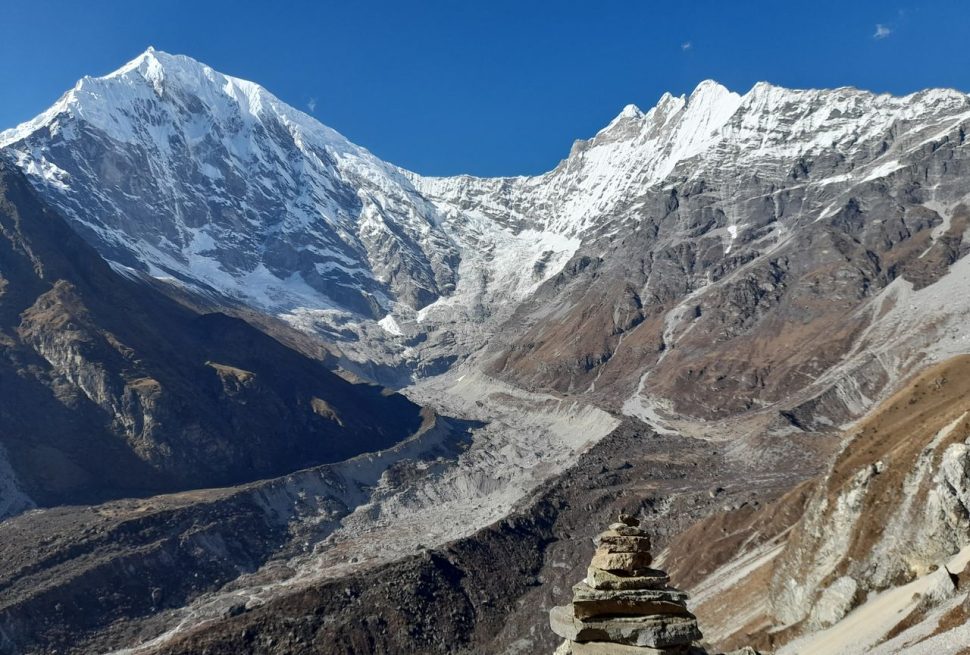
You can go on popular routes such as Everest Base Camp, Annapurna Base Camp, Langtang Valley & Manaslu Circuit depending on the current weather & trail conditions.
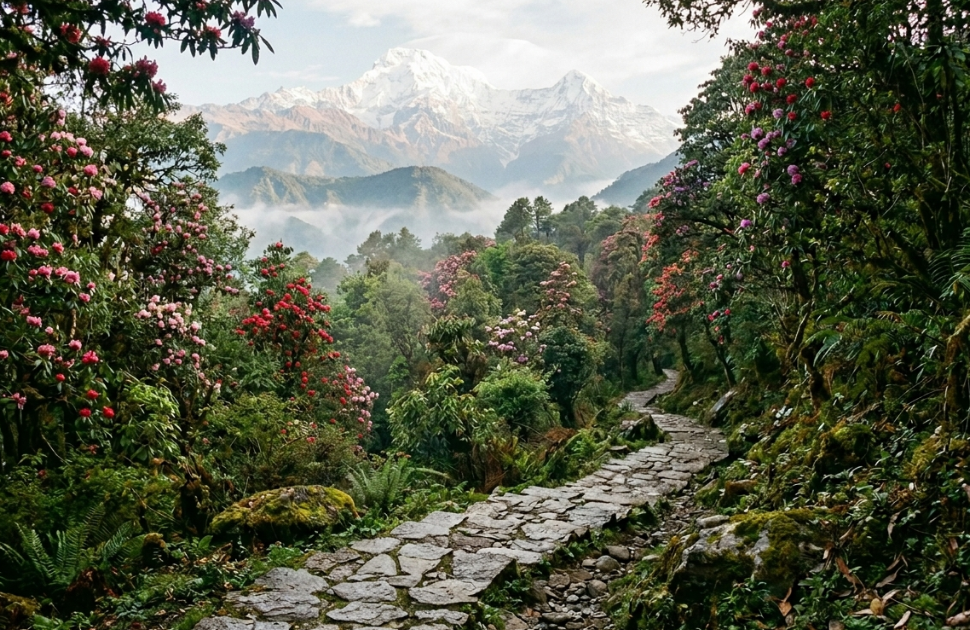
One of the best things about visiting during spring is rhododendrons. The National flower of Nepal will be in bloom in different areas & altitudes.
Great for those who love:
- Forest & mountain village treks.
- Taking photos of blossom & mountain views.
- Warmer temperatures during the day.
- Cultural sites.
- Combining treks with sightseeing in Kathmandu & Pokhara.
However, there can be some cloud during spring. There can be haze, afternoon clouds, wind & occasional storms meaning mountain visibility can be affected.
If you are going to high altitude treks ensure you have appropriate cold weather clothing & flexibility in your schedule.
2. Summer/Monsoon (June to September)
Summer can bring warmer temperatures & higher humidity to the lower areas. Most of Nepal will experience rainfall. The landscape will be very green, rivers will be stronger & crops will be growing in the fields. If you are interested in rural life, taking photos, nature & visiting less busy areas this can be a great time to visit.
However, generally the monsoon can be harder for traditional Himalayan treks.
The trails can become muddy & slippery due to the rain. Landslides, road closures, leeches & delayed flights can occur. Mountains can also be covered in cloud for long periods of time.
Popular trekking areas such as Annapurna, Langtang & Everest can be challenging depending on the route & altitude.
However, not all areas will be challenging.
Certain areas of the Northern Himalayas will be in a rain shadow area. This means the mountain ranges around the area will not receive much rain. Certain areas of Mustang & other carefully picked routes can provide great trekking opportunities.
Before booking any trips during the monsoon ensure you check the local conditions, transport & professional advice.
This is a great time to do some classic treks such as:
- Everest Base Camp Trek
- Annapurna Circuit Trek
- Annapurna Base Camp Trek
- Manaslu Circuit Trek
- Langtang Valley Trek
- Gokyo Lakes Trek
These are dependent on the actual trail conditions, altitude, snow and any local restrictions.
Autumn can also coincide with some large festivals in Nepal such as Dashain and Tihar for many years. This can be a great time to learn about local families traditions, customs, food and ways of life.
The main downside is that it can be very popular meaning flights, trekking guides, tea houses and hotels can become busy. Booking key things in advance can help make your trip more comfortable.
October and November are excellent times to kick start your 2027 adventure if you want to do some trekking, mountain photography, culture and sight seeing.
4. Winter (December – February)
Although the high Himalayas can get quite cold, Winter can be a great time to visit some of Nepal’s cities, cultural spots, low hills and some trekking routes.
You can often get some sunny days meaning you might get some great mountain views. Kathmandu and Pokhara can be very nice in the day. However, it can get quite chilly in the mornings and evenings.
Higher up, it can be very cold and below freezing. Some trails and mountain passes can become blocked due to snowfall. Some lodges might also be closed.
If you’re interested in:
- Culture of the Kathmandu Valley
- Lakeside atmosphere of Pokhara
- Chitwan and other suitable low altitude destinations
- Short walks around Kathmandu
- Low altitude treks
- Peaceful travel outside of main trekking season
then Winter is a great time to visit. However, if you’re looking to do Everest Base Camp or pass over high Himalayan passes then you’ll need to plan properly and have the correct equipment and expert guidance. Conditions can become tricky.
Overall, it’s not a bad time to visit Nepal. Just think differently about your destinations.
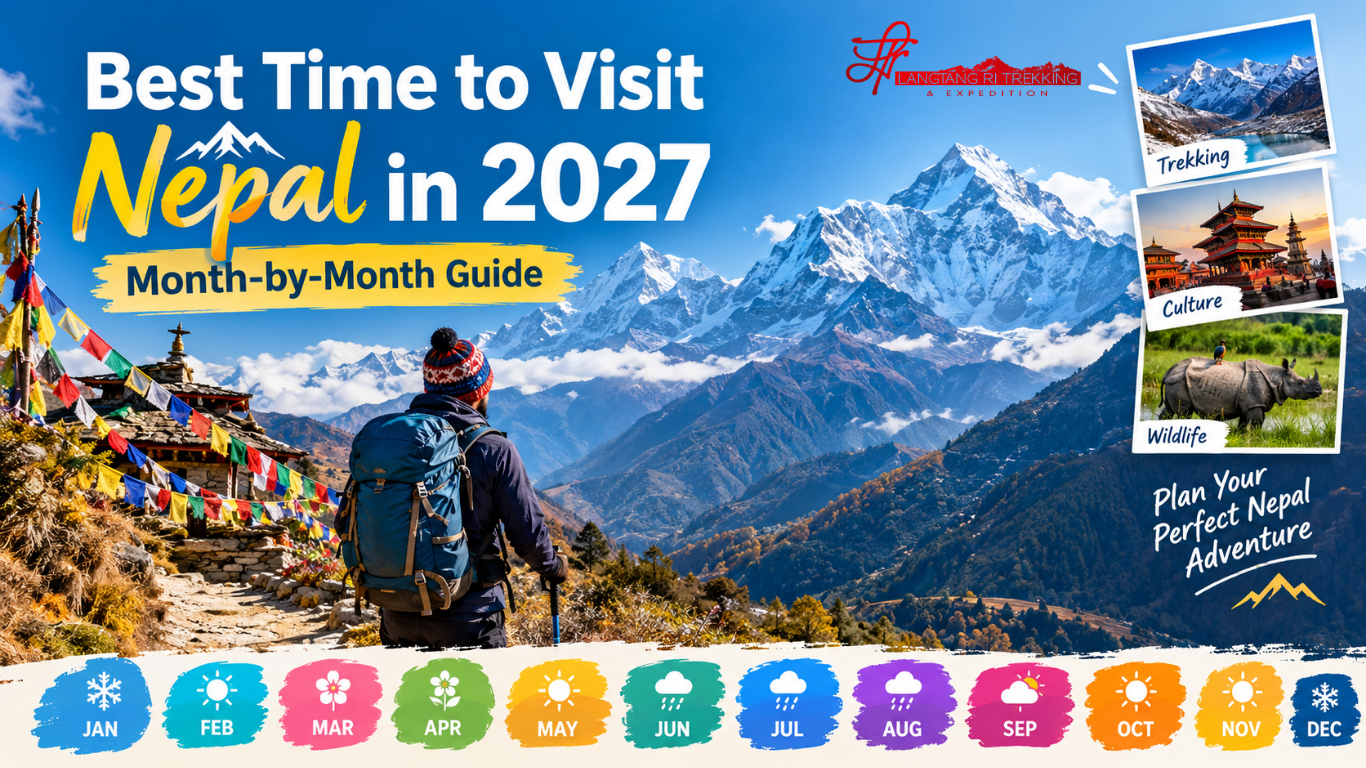
Nepal Month by Month Guide 2027
Below is a guide on what you can expect for each month of the year. This is a general guideline and cannot be guaranteed for specific dates in 2027.
January – Peaceful Travels and Winter Views
This is one of the coldest months in Nepal.
Kathmandu is great for cultural sight seeing. You can visit temples, traditional buildings and try out the local food. Pokhara can be very nice in the day with some great lake walks and mountain views. Chitwan is also worth considering.
High altitude trekking can be more challenging due to freezing nights and potential snowfall.
Best things to do: Kathmandu sight seeing, Pokhara, Wildlife Safaris, Short Walks and Low Altitude Treks.
Tips: Pack warm clothing. Check for availability of lodges. Don’t book tough high altitude passes.
February – Beginning to Improve
February begins to improve with longer days.
The first part of the month can be quite chilly, especially at night. However, towards the end of the month conditions can be becoming more comfortable for some treks.
A great time for cultural sight seeing, wildlife and if you’re looking for less busy times.
High altitude destinations can still be chilly and affected by snow.
Best things to do: Culture Tours, Low Altitude Treks, Kathmandu Valley, Pokhara and Suitable Wildlife.
Tips: If you’re doing a spring trek, then use this time to book permits where applicable, accommodation and equipment.
March – Start of Spring Treks
March is a great month to start exploring Nepal.
Temperatures start to increase, the forests begin to change and many popular trails become more appealing. High altitude can still be chilly so make sure to prepare properly.
Depending on altitude and local weather you can see some early blooming Rhododendrons.
Popular options include: Langtang Valley, Annapurna Base Camp and Everest Base Camp (depending on trail conditions).
Best things to do: Spring Treks, Mountain Photography, Culture and Village Walks.
Tips: Pack layers. Allow extra time for unexpected weather or travel.
April – Flower Power!
April is one of the best months to go trekking in Nepal.
Rhododendron forests can be very colourful. Days are longer and many classic treks can provide some great mountain views.
Everest Base Camp, Annapurna Circuit, Langtang Valley and Manaslu Circuit may all be suitable (depending on the trail conditions and personal preparation).
This is also a great time for those wanting to do a mix of trekking and culture in Kathmandu and Pokhara.
Temperatures can be quite hot in the day and there can be some cloud/haze in the afternoons.
Best things to do: Multi-day Treks, Rhododendron Photography, Mountain Villages and Culture Tours.
Tips: Book popular services. Remember it can still be chilly at high altitudes despite the spring sun.
May – Warm Days
May is the latter part of spring.
Lower areas can become quite hot. Trekking areas can be warmer in the day. High altitude can still be nice but there can be more cloud, wind and occasional storms in the afternoons.
There are still some high altitude climbing and trekking goals that are in season for those who are experienced. This does need specialist planning though.
This is a reasonable time if you like warmer temperatures. Just make sure to pick the right destinations.
Best things to do: Some Himalayan Treks, Culture Tours, Mountain Expeditions (with professional support) and Cool Hill Destinations.
Tips: Start trekking early in the day. Pack sun protection. Check the forecast.
June – Monsoon
June can start to get quite rainy in many parts of Nepal.
The first half of the month can be very different to the second half. Rain, humidity and cloud become more important to consider.
Trails can become slippery and travel can take longer.
Those who enjoy nature and culture may still find June a rewarding time.
Best things to do: Culture, Some Low Risk Outdoor Activities and Carefully Planned Rain Shadow Destinations.
Tips: Check travel. Check the weather for specific areas. Be flexible with your plans.
July – Green and Rainy
July is typically in the middle of monsoon season.
Fields, forests and hill sides can be very green meaning great photographic opportunities. However, it can be quite rainy meaning trekking, mountain views and travel can be affected.
Classic trekking routes in many areas of the Himalayas can be challenging.
- Some Rain Shadow Destinations may be suitable. However, check accessibility and current conditions.
- Best things to do: Culture, Rural Areas and Carefully Chosen Destinations.
- Tips: Don’t over schedule. Check for road and flight updates. Don’t underestimate the risk of heavy rain.
- August – Monsoon Nature
- August is generally still in the monsoon.
The countryside can be very pretty and lush. Rivers, waterfalls and farmland can be dramatic. However, heavy rain can cause landslides, muddy trails and disruption.
This is generally not the first choice for those wanting clear mountain views.
However, you can still experience the culture and nature of Nepal if you’re flexible with your schedule and have chosen the right destinations.
Best things to do: Culture Tours, Rainy Day Photography and Carefully Chosen Rain Shadow Destinations.
Tips: Check for reliable local updates. Pack rain protection. Have alternative plans.
September – Transition Month
September can be a transitional month.
The beginning of the month can still be quite rainy with heavy monsoon rains. However, conditions can improve towards the end of the month (this can vary from year to year).
As the rain starts to stop, the landscape can still be very green. Some areas may begin to improve for trekking. However, don’t assume clear skies and good trails on specific dates.
Best things to do: Flexible Trekking, Culture Tours, Landscape Photography and End of Season Monsoon.
Tips: If the mountains are a main priority then consider having a flexible departure window or plan for October.
October – One of the Best Times to Visit!
October is often considered the best time to visit Nepal.
Monsoon has generally stopped in most areas. Skies are often clear and temperatures are comfortable for many outdoor activities.
This is a great time for classic trekking routes, mountain photography and a mix of Himalayan adventure and culture.
Dashain and Tihar may also fall into this general timeframe.
Best things to do: Everest Base Camp, Annapurna Circuit, Annapurna Base Camp, Langtang Valley, Manaslu Circuit, Culture Tours and Wildlife.
Tips: Book popular accommodation and travel in advance. Especially if your itinerary relies on a specific flight or busy trekking route.
November – Clear Views
November is another amazing time to go trekking in Nepal.
Often very dry with great visibility. The post monsoon landscape makes for some beautiful Himalayan photography.
As the month goes on temperatures can become quite cold at high altitude, especially at night.
Many classic trekking routes can be done. However, late season snow and local conditions can affect high altitude passes.
Best things to do: Multi-day Treks, Mountain Photography, Village Experiences, Culture Tours and Wildlife.
Tips: Pack warm sleeping gear if high altitude overnight stays.
December
December offers a calmer time to visit whilst often having clear skies. However, it can get quite cold at higher altitudes.
Low altitude areas such as Kathmandu and Pokhara can offer great opportunities for sightseeing and short walks. Some low altitude trekking routes might also be a good option.
However, high altitude passes and mountain routes can be tricky due to snow and ice.
Best Activities
Cultural heritage; Low altitude walks; Pokhara; Suitable wildlife; Easy winter travel.
Best Tips
Choose a route that suits your experience of cold weather. Ensure facilities are open.
Best Months to Visit Nepal
The best month to visit will depend on what you are looking to do.
- Everest Base Camp Trek
March to May and October to November are generally the best times to do Everest Base Camp Trek.
Spring offers long days and the possibility of seeing some beautiful blossoms at lower altitudes. Autumn can offer clearer skies after the monsoon season.
However, both seasons can be quite cold with snow possible, winds and flight disruptions.
As this trek is high altitude, ensure you are acclimatising and going up slowly. Choose a suitable itinerary.
- Annapurna Circuit Trek
October and November are popular times to do the Annapurna Circuit due to favourable trekking conditions.
March and April are also excellent times for many people.
As there is a variety of scenery and high altitude areas, you can expect a variety of conditions between villages and mountain pass. Snow could affect your ability to travel.
March to May and October to November are generally good times to trek.
Spring offers the opportunity to see some lovely blossom. Autumn offers great mountain views and comfortable trekking conditions.
You will also learn about the culture of the Tamang people and traditional villages within the Langtang National Park.
Winter can be quite snowy and very cold at higher altitudes. Monsoon conditions can affect the trails.
Autumn and spring are the main seasons to consider.
October and November are popular due to favourable weather. Spring is another great season.
This trek involves crossing the high altitude Larkya La Pass so it is important to consider the weather, snow, acclimatisation and conditions.
Ensure you know what permits you need currently and who you are going with as a guide.
- Kathmandu and Pokhara
These can be visited all year round.
October and November can be a lovely time to visit for sightseeing and outdoor activities. Spring offers pleasant conditions for cultural tours and nature.
Winter can be a rewarding time to visit. Although it can be quite cold in the mornings and evenings, clear days can be enjoyed. Pokhara offers fabulous lake side views, great viewpoints and outdoor activities to add to your Himalayan trek.
- Chitwan National Park
October to March can be a pleasant time to visit for wildlife. Wildlife will depend on animal activity, habitats and available activities.
Some people may find the hotter months uncomfortable. Monsoon can affect trails.
If you are planning a safari, ensure you are going with a responsible operator and follow guidelines for the park, wildlife safety etc.
Festivals and Culture
Nepal offers a wonderful culture so you may want to consider the dates.
Dashain
One of the biggest festivals in Nepal. Family, traditional and cultural activities. Dates vary each year as they follow the lunar calendar.
Tihar
A festival of lights offering unique cultural experiences. Traditions include decorating and celebrating different animals and relationships.
Holi
A festival of colours celebrated in many areas of Nepal. Generally February/March.
Buddhist Festivals
Important festivals throughout the year in monasteries and places of worship. Exact dates and public activities vary.
Local Festivals
Every town and ethnicity will have their own festival. This is a great way to learn about the variety of traditions in Nepal.
If you want to experience a specific festival, check the dates for 2027.
Weather in Nepal
Generally,
Kathmandu Valley – Moderate climate with warm conditions in spring and summer. Colder in the mornings and evenings during winter.
Pokhara – Often warmer and wetter than Kathmandu. Can be quite rainy during the monsoon.
Terai – Includes Chitwan and Lumbini. Can be extremely hot in the summer. Generally cooler in the winter with comfortable conditions for sightseeing.
Mid Hills – Can vary depending on altitude. Often good conditions for walking and visiting villages in spring and autumn.
High Himalayas – Temperatures can be very cold. Even if it is warm at lower altitudes, it can be below zero at high altitudes. Can be quite challenging due to wind, snow and high altitude.
The Nepal Tourism Board has helpful information about the climate. Ensure you look at the forecast for the exact areas and dates.
[Note: https://ntb.gov.np/plan-your-trip/about-nepal/climate]
Packing for Nepal 2027
Ensure you pack for the right month, destination and altitude.
- Clothes
- Base layers (moisture wicking).
- Warm layers.
- Waterproof jacket and trousers.
- Comfortable trekking trousers.
- Warm hat and gloves for colder areas.
- Sun hat and sunglasses.
- Walking/tracking shoes.
- Trekking Items
- Backpack with rain cover.
- Reusable water bottle.
- Water purifier for your itinerary.
- Sun cream and lip balm.
- Medicine and basic first aid.
- Head torch and spare batteries.
- Walking sticks if needed.
- Sleeping items.
- Travel Items
- Passport (valid) and entry documents.
- Travel insurance for activities and high altitude if applicable.
- Copies of important bookings and permits.
- Emergency contact details.
- Cash for areas without electronic payment.
If you are trekking at high altitude, speak to a qualified guide for advice on what to wear, items to pack, acclimatisation and emergency plans.
Even if it says it will be sunny, do not leave your warm clothes at home. Conditions can change quickly the higher you go.
Planning Your Trip to Nepal 2027
Choose the right experience to have a successful trip.
1. What Experience Do You Want?
Do you want to challenge yourself with a Himalayan trek? Do you want a short mountain break? Are you wanting a cultural holiday? Or maybe a wildlife safari? Or a combination?
2. Choose the Right Season
Many classic treks will be best either March-May or October-November. If you cannot travel during these times research the conditions for your chosen route.
3. Choose a Suitable Itinerary
Ensure you have the right amount of time available. Are you physically ready? Consider the altitude and how fast you want to travel. High altitude treks will require acclimatisation time.
4. Permits
Depending on your route, you will need trekking permits, conservation fees, restricted area rules and guides. These can vary so ensure you look up the latest official guidelines.
5. Transport and Accommodation
Transport to mountains can be affected by the weather. Be flexible with your plans. If you have an international flight to catch, this is even more important.
6. Pack for the Worst
Pack for the coldest and wettest conditions.
7. Local Responsible Operator
If you are doing a challenging route, a qualified local guide can help you understand the conditions of the trail, local culture and safety.
Will Nepal be Expensive in 2027?
The overall cost will depend on how you are travelling, where you are going, how many people are travelling, the season and what is included.
A cultural tour of Kathmandu and Pokhara will be very different to a multi-day trek requiring guides, porters, permits, accommodation, food and internal flights.
Costs can vary during busy trekking times as popular areas may be busier.
Consider,
- International Flights
- Accommodation
- Guides and porters
- Trekking permits and conservation fees
- Food and drinks
- Transport
- Travel Insurance
- Rental or buying equipment
- Emergency money and flexibility.
Ask your tour providers for a clear breakdown of what is included and what isn’t. It is more useful to compare itineraries and support rather than just cheapest.
Frequently Asked Questions
1. What is the best time to visit Nepal in 2027?
The best time to visit Nepal in 2027 will depend on your travel preferences. October is a great option, with great trekking weather and clear mountain views. November can also be a great time to visit. March and April are great times for spring trekking and blossom.
2. Is it worth visiting Nepal in January?
Yes, it can be a rewarding time of year for cultural sightseeing, wildlife treks, city breaks and some low altitude treks. High altitude treks will require a bit more preparation due to the colder temperatures.
3. Can you trek in Nepal during the monsoon season?
You may be able to trek on some routes, however the rain can cause challenging trekking conditions. Some areas in the rain shadow may be a better option. It is always best to look into local weather, road conditions and ask a professional.
4. Is April a better time to trek than October?
Both months are great for many treks. April offers blossom and warmer temperatures and October often offers clearer skies. It really depends on what route you want to undertake.
5. What is the best time to see the Himalayas clearly?
October and November can offer great mountain views, however it is not guaranteed and spring can offer stunning panoramic views.
6. What is the best time to go trekking in Nepal as a first timer?
Many first time trekkers will find Spring and Autumn are great times. Choose a route that suits your fitness level, time available and mountain experience. Ensure you have enough time to acclimatise.
7. Is it possible to visit Nepal in December?
Yes, December can be a great time to visit for many cultural tours, low altitude treks and some routes. High passes and remote destinations may be affected by snow and cold.
8. How long should I spend in Nepal?
If you’re looking to do a short cultural break then you can fit this into a few days. If you’re looking to go trekking in the Himalayas then you could spend between 1-3 weeks depending on your route. It is a good idea to allow extra time for any delays, acclimatisation and rest.
9. Should I book my trek in advance for 2027?
It is a good idea to book in advance if you’re travelling during the busy Spring and Autumn seasons. If you’re travelling with domestic flights, specific accommodation or have a set date then it is a good idea to book.
10. Where can I find good information about travelling to Nepal?
You can check out the Nepal Tourism Board for general travel and weather information. Check the relevant official sites for any permit requirements, protected areas, weather and current conditions.
Final Verdict – Best Time to Visit Nepal in 2027
The best time to visit Nepal in 2027 will depend on what adventure you would like.
If you’re looking to trek under the mighty Himalayas, visit traditional mountain villages and enjoy clear mountain views then October and November are great months to visit.
If you would prefer to visit blossom covered rhododendron forests with longer daylight hours then March and April are great months.
Winter can be a peaceful time to visit for cultural breaks and low altitude adventures. The monsoon can show you a greener side to Nepal. There is no perfect month to visit for everyone. The most rewarding trip will come from ensuring your travel dates match the destination, preparing for the weather and allowing enough time to enjoy your trip.
We believe that a memorable adventure in Nepal starts with good planning and local knowledge. We appreciate the mountains and the communities we visit.
Whether you’re looking to trek to Everest Base Camp, Annapurna Circuit, visit the Langtang Valley, Manaslu Circuit or go on a cultural trip to Kathmandu and Pokhara, start to plan your 2027 adventure with the best time of year for you.
Get in touch with Age of Himalayas to discuss your preferred dates, route, itinerary and local travel arrangements.
Your Himalayan Adventure Starts Here