
Introduction
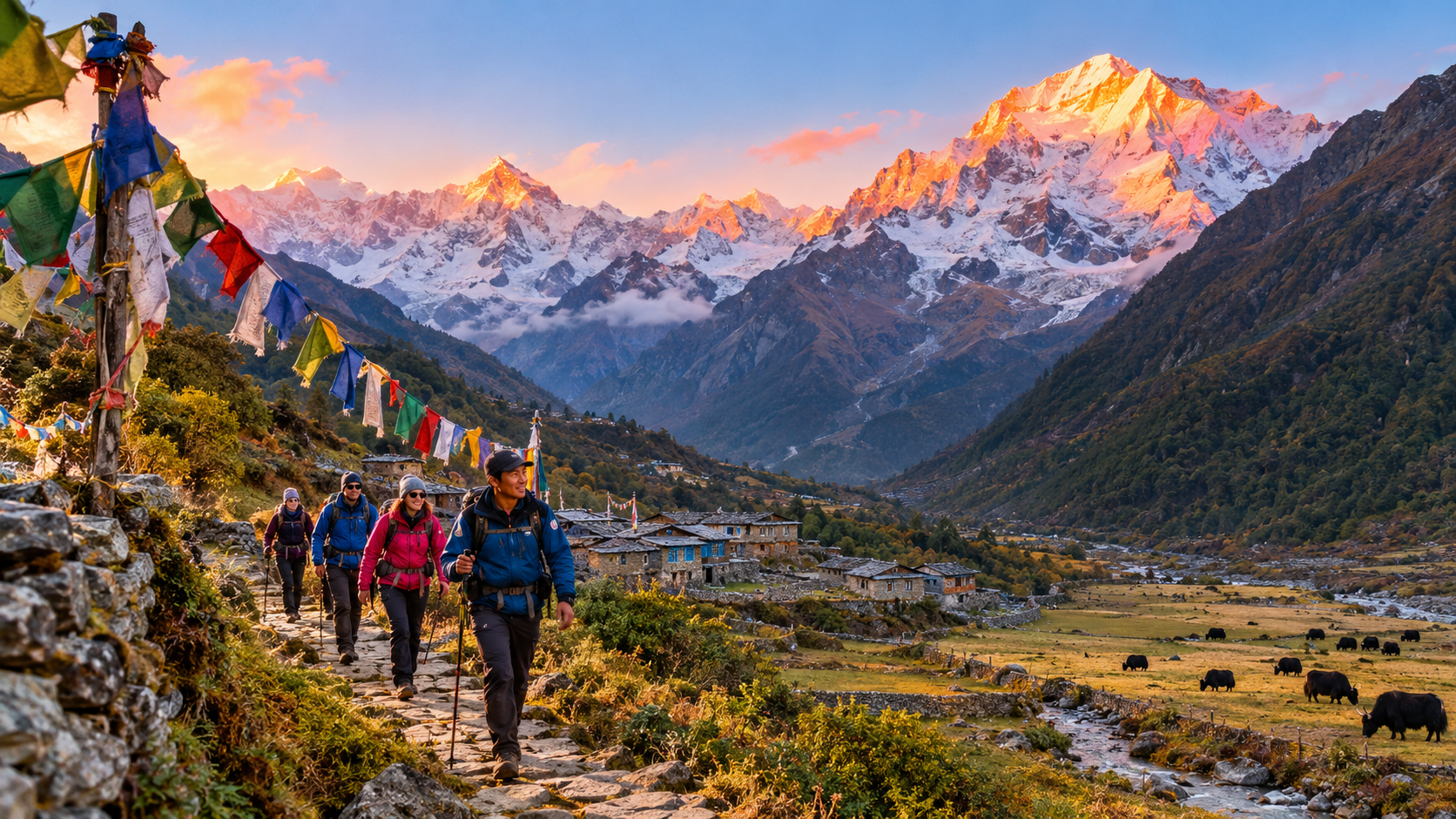
7 Reasons to Trek Nepal With a Trekking Agency that stand in front of the Himalayas is a life changing experience. The first snow peak turning pink at sunrise, the sound of yak bell on a stone trail, having a hot milk tea in a teahouse after a long day’s trek, all these and more make thousands of travelers visit Nepal every year. Trekking in Nepal is not a common vacation, it is an adventure into the high mountains, away in the world, and therefore it must be well planned. The reality of planning is very different from the dream of a trek. Before you even put on your boots you need to know what permits you need, which trail is best for you, how much elevation is safe to gain per day, where are you going to sleep every night, what to do if the weather turns bad or someone becomes ill. Rules and mountain conditions change, and mistakes on the mountain can be expensive.
Many experienced trekkers, and almost all first-time trekkers, choose to book a trek with a licensed local trekking company. A good trekking agency does not take the adventure out of your trek, it just takes away all the stress surrounding it. In this article we give you seven reasons why a trekking agency ensures a safer and more enjoyable trek in Nepal. We will also look at what difference makes a good and a great trekking operator, and why Langtang Ri Trekking and Expedition can be a good choice for those seeking excellent treks with reliable customer service.
Reason 1: Permits and Paperwork Handled for You
Every trek in Nepal comes with a set of permits, getting it wrong can mean fines, delays or being turned back at a checkpoint. Depending on the route you choose you may need a Trekkers’ Information Management System (TIMS) card, a Permit to National Park or Conservation Area and a local municipality permit. For instance, the Langtang region requires entering Langtang National Park and registering at the check posts along the trail.
Restricted areas add onto this. The area’s such as Upper Mustang, Manaslu, Nar Phu and Dolpo, require special permits only available through a registered trekking agency (for a minimum of two trekkers with a licensed guide). If your dream trek is one of these, it is not just a convenience but a necessity to book with a trekking agency.
A good trekking agency handles everything for you. A professional agency collects your passport details and photographs, submits the forms to the correct offices in Kathmandu, pays the fees and carries the necessary paperwork so it is available at every checkpoint. You arrive, meet your guide and everything legal is done for you.
What this saves you:
• Hours or even days spent queuing at government offices in Kathmandu
• Fines and delays due to a missing or incorrect permit
• The stress of keeping up to date with permit fees and requirements
Rules and fees are subject to change and local agencies have the current permits and rules for each region, something a first-time visitor, looking at old forum posts cannot do.
Reason 2: Safety – Guides and Emergency Support
The Himalayas are beautiful, but remote. Trails reach over 3,000 meters, where the air is thinner and unpredictable weather can strike within hours. Getting hurt or ill on the mountain is inevitable, and the nearest hospital can be days’ walk away. This is the most important reason to book a trek with an agency.
A licensed guide is trained for these conditions. Good guides carry first-aid supplies, know the early signs of acute mountain sickness (AMS) such as headache, nausea, dizziness and poor sleep, and know when to slow the group, hold at a certain altitude or turn around. They assess every trekker each day, not just the ones who complain. A lone trekker, who feels ill at 4,000 meters has no one to assess his condition.

A professional company will plan the itinerary to take into account the altitude. The general rule is to climb up slowly and limit the gain in sleeping elevation after you pass roughly 3,000 meters, and the inclusion of rest or acclimatisation days. Rushing a schedule to save a day is a common cause of altitude illness, and a responsible agency will not do this to save money.
Now the question of what to do if something goes wrong, a reliable trekking company has:
• An emergency plan and a person in Kathmandu who can react fast
• Experience in arranging helicopter evacuation and co-ordinating with your travel insurance
• Guides who know how to keep in contact with the lodges, other guides, the office, along the route
• Group sizes and guide-to-trekker ratios that ensure everyone is well looked after
Travel insurance that covers trekking at altitude and emergency evacuation is essential, and a good agency will remind you of this before you book. Having a team that knows how to use your insurance in an emergency situation ensures that a frightening situation is manageable.
Reason 3: Local Knowledge of Trails, Weather and Timing
No guide book or application can replace the knowledge of someone who has hiked the trail dozens of times. Local guides know the trail and all its intricacies. Which sections get icy in the morning. Which stream crossing gets tricky after heavy rains. Where landslides tend to block the trail. Which villages have the best rooms and warmest dining halls.
This affects the entire trek. Your guide can tell you what time to leave in the morning to see the mountain peaks before the clouds roll in, where to stop for the best photographs, and where to stop early because the weather ahead looks bad. In the Langtang valley for instance, a good guide helps plan the walk to Kyanjin Gompa and the climbs to viewpoints such as Kyanjin Ri and Tserko Ri, so you see the peaks at their best and can still get back to your lodge comfortably.
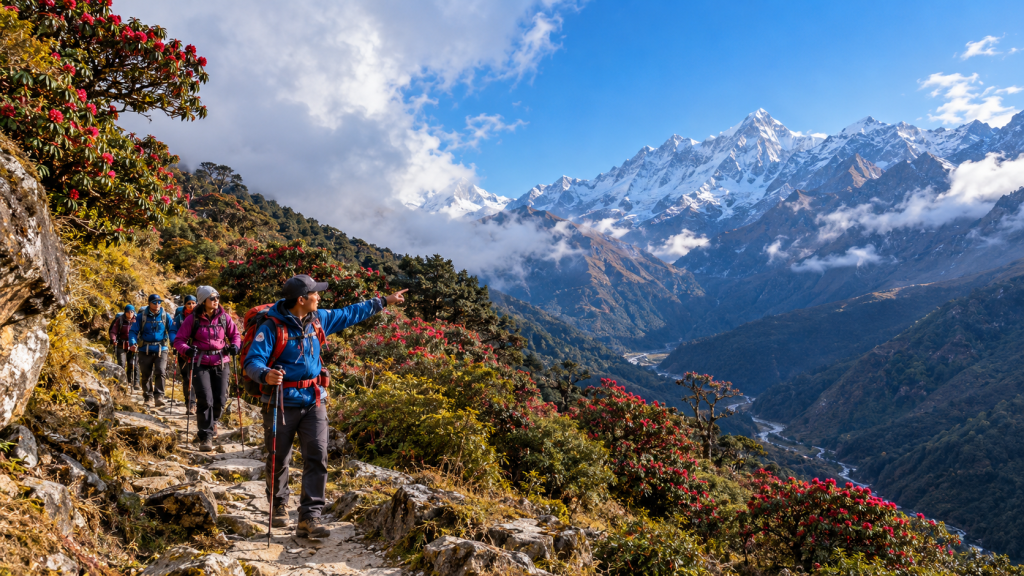
Local knowledge also encompasses the calendar. Nepal has two main trekking seasons: autumn (roughly October to November) and spring (roughly March to May). Autumn has clear skies and good weather, and spring is famed for the rhododendron blooms. Winter and the monsoon months can be rewarding on certain trails, but they require more planning. An experienced agency will tell you honestly which season and which trek are a good match for your expectations, not the most expensive.
Finally, good guides read the group. They know who is struggling with the pace, who needs a break, and who wants to try a side path. The trek is tailored to suit the group, not the other way round.
Reason 4: All the Logistics Arranged from Start to Finish
For a trek in Nepal there are many moving parts that can go wrong if you tackle it yourself. A trekking agency brings it all together into one smooth plan.
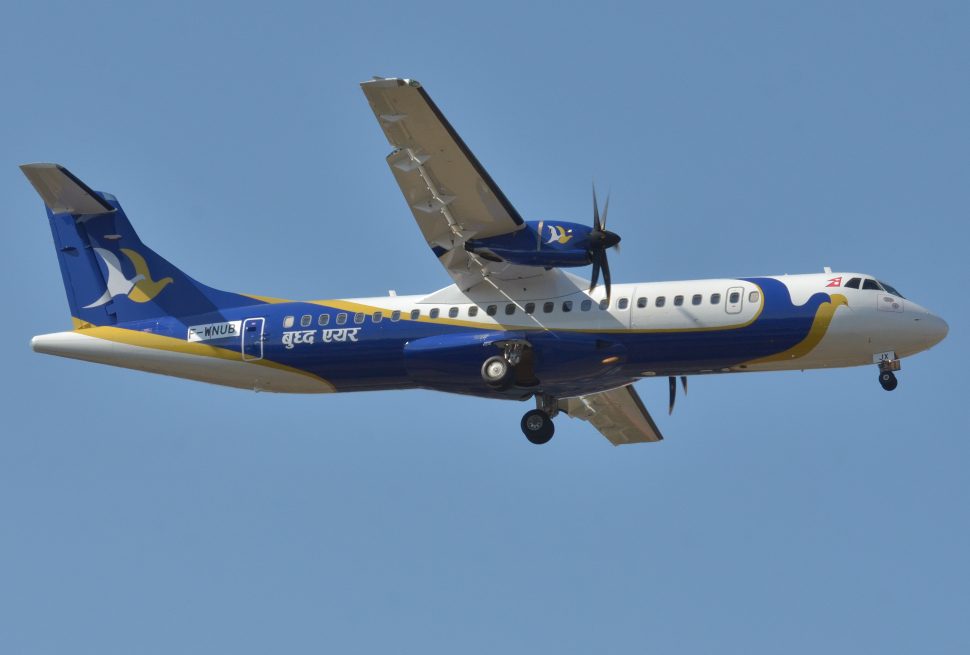
Transport. Your airport pickup, hotel transfers and the journey to the trail head are arranged in advance. For Langtang, that means a road journey from Kathmandu to Syabrubesi, the usual starting point. For other regions it may be a domestic flight, such as the mountain flight to Lukla for Everest treks. Local drivers know the roads and your guide knows what to do if a flight is delayed or a road is blocked.
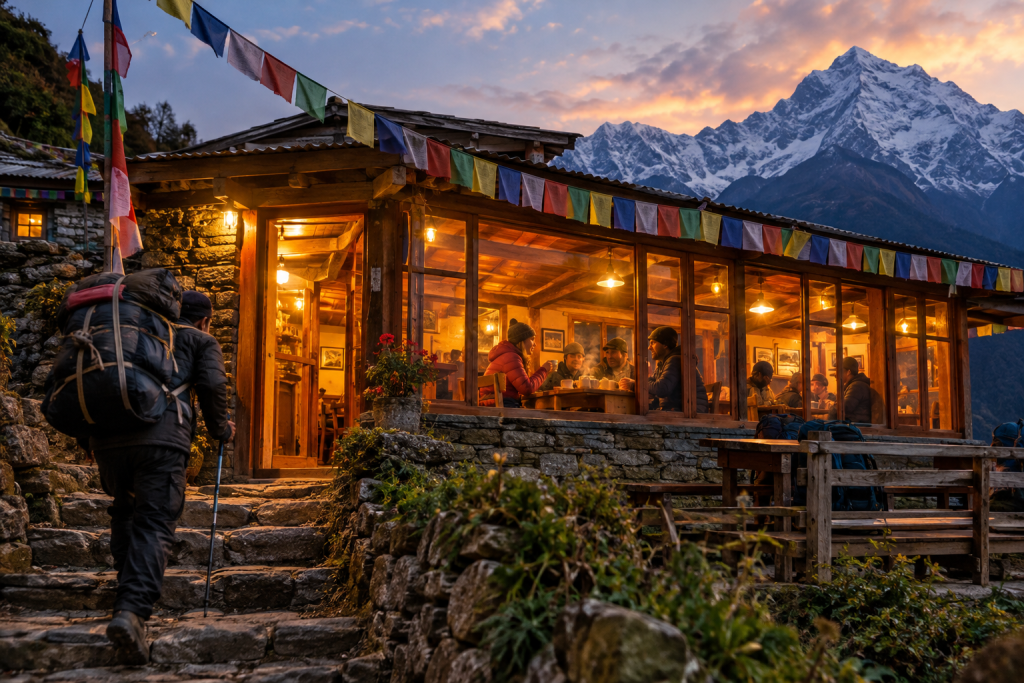
Accommodation. On most popular trails you sleep in teahouses, simple mountain lodges with basic, shared rooms. In busy seasons the best rooms fill up fast. Agencies work with trusted lodge owners, ensuring a bed and a hot meal is waiting for you at the end of every day.
Food and water. Your guide helps you choose the safe, filling meals and clean drinking water. It is important to your body’s system when trekking at high altitude.
Porters. Carrying a heavy pack up steep trails is tiring and can put a dampener on your trek. A porter service allows you to carry a much lighter daypack, saving your energy and your knees. It also provides someone with a fair job in the local economy.
One point of contact. Instead of co-ordinating drivers, lodges, guides and permits yourself, you speak to one team before and during your trip. One message is all that is required if your plans change.
The result is that you spend your time walking and enjoying the mountain, not dealing with the logistics.
Reason 5: Cultural depth you would miss on your own
In the trails of Nepal not only mountains are beautiful, the villages that dot the route are home to Tamang, Sherpa, Gurung and other communities who have lived on the land for centuries, each with their own languages, traditions, festivals and foods. A local guide adds a whole new dimension to the trek, bringing depth and colour to this unique Nepali experience.
Local guides can share cultural insights that would be unknown to you, for example why prayer flags flutter above bridges, why you always walk on the left-hand side of mani walls or chortens, and what the carvings say in the mani stones. They can also introduce you to the family who run your lodge, lead you into the grounds of a small monastery, and help you understand how dal bhat, momos or butter tea are traditionally made. In the Langtang region in particular, the Tamang culture is distinctive, from the stone-built cottage-houses, to their monasteries, and the kindness of the local village people. This valley has also recently been in the news following the earthquake in 2015; being rebuilt by the local community makes for a truly inspiring walk as you learn the background on your trek. Guides are also experts on etiquette, such as ways to greet people, when to ask to take a picture, how to behave around chortens and temples, and how to clean up after yourself in a village – a language barrier can make these cultural nuances difficult to navigate on a solo trek, but with a local guide these become the highlights of the trip.

Reason 6: Your trek supports local communities and fair work
The mountain regions of Nepal rely on tourism as a key source of income, and booking with a locally-owned trekking company means far more of your money is going back into the pockets of those who help you enjoy this special region, as opposed to a foreign-run company with significant overheads. A local company can provide a valuable service to both you and the local economy by offering work in many roles.
Your trekking package funds a range of local jobs such as guides, assistant guides, porters, cooks, drivers, lodge owners, farmers (who donate or sell their produce to the lodges), and shopkeepers. For many people in the local region, trekking season is the time of year when they pay for their children’s education, fund healthcare, and rebuild their homes after the winter storms. It is also important to ask how those working in the trekking industry are treated – a responsible company will consider the welfare of its porters and guides. These can include:
• Ensuring that each porter carries a reasonable load
• Providing appropriate equipment and clothing during cold weather
• Paying competitive wages on arrival in Nepal and offering insurance
• Treating guides and porters as professionals who deserve to be treated with respect
Asking a company about their working practices is a sensible question, and a proud company will not shy away from explaining their approach. Fair treatment of staff is not just the right thing to do, it’s a good business practice; a well-treated porter or guide will look after you better, and be likely to continue working with you in future years. Responsible trekking companies also look after the local landscape, encouraging trekkers to take away their rubbish and use less single-use plastics, where possible. They might also offer refill points in the villages or on the trail rather than a plastic bottle of water, and follow national park guidelines. Choosing a responsible company is a way of showing your support for the local region, the mountain environment, and the people who care for it.
Reason 7: Flexibility and peace of mind
A mountain trek rarely goes to plan – a cancelled flight, landslide, snowstorm or tired trekker can mean that itineraries need to change on the ground. When trekking on your own you have to tackle every challenge alone, with limited connectivity and a small budget. An experienced trekking agency will always build in flexibility and buffer days in the itinerary, and plan for the unexpected. Guides can make decisions on the ground to shorten or lengthen the trek according to the group’s condition and the weather, while your Kathmandu office can rearrange transport and hotels if a problem arises during the trek. This means you don’t have to deal with any issues yourself. There’s also peace of mind that comes with a clearly outlined package – the things that are included such as food and accommodation are clearly outlined in your booking, reducing the risk of budget blowouts or hidden charges. Family and friends at home can also rest easy knowing a professional agency has looked after your mountain trekking adventure.
Peace of mind ensures you can enjoy every step of your journey, from looking at the mountains to connecting with the local people along the trails. This is the main reason most trekkers choose to book with local agencies, rather than trying to plan a solo trip. Instead of thinking about permits, accommodation costs, and transport, trekkers can admire the views and enjoy the local culture.
Why Langtang Ri Trekking and Expedition is a great choice?
All seven reasons listed above are based on a single factor – the company you choose to support your trek with. A good company is only as good as the service they provide and the management they offer.
Service based on the needs of the trekker
Good service usually starts long before you set off on your trip – with Langtang Ri Trekking and Expedition, you can expect excellent communication to begin your experience of Nepal. This means clear answers to your questions about your trip – the detailed itinerary, what is and isn’t included, and any practical matters about fitness or insurance that you need to know. You will also receive good value for your money, with an outline of what you are paying for. During your trek, excellent service means looking after you on the trail – this can include suitable accommodation, healthy meals, and attentive, caring guides who are committed to seeing you arrive back in Kathmandu safe and well. It also means asking if you need extra days, or a break, to make sure your trek is enjoyable.
Management that shows on the trail
Most trekkers don’t notice good management, unless things go wrong. But this is when it is needed most – if an emergency situation arises, a good manager will be able to calmly deal with the problem and support the group. Good organisation is also vital – a good trekking operation will make sure that permits, transport, accommodation, guides and porters are all in place and ready for the start of your trek. It also means making sure that everyone knows their role. Other markers of a good management system include looking after your safety with sensible itineraries, acclimatisation advice, and keeping in touch with the guides on the trail. Having clear communication with your trekking office means that any changes or problems can be dealt with as they arise, rather than leaving you stranded on the mountain with nothing to do but stare at the summit.
Local knowledge of the Langtang region
Langtang is one of the most popular trekking areas near Kathmandu, with its forested valleys, Tamang villages, yak grazing land, and views of snow-capped peaks. A trekking company that has a special interest in the Langtang region means that staff have local knowledge of this mountainous area. This helps trekkers to get the best value, advice and experience for your adventure, whether you are thinking of the shorter Langtang valley trek, or a longer trek that includes Gosaikunda and Helambu.
Respected and respected team
The care that a company shows towards its staff is reflected in staff’s care towards the company’s guests. Well-treated guides and porters provide a better service. Travelers may also feel reassured that their trek or tour supports the local community and economy. The choice of a locally-run company, such as Langtang Ri Trekking and Expedition, is therefore a responsible one.
If you are looking for a trek where the planning takes care of itself, guides are attentive and the whole experience is well-organised, Langtang Ri Trekking and Expedition is a company worth contacting.
How to Choose a Trustworthy Trekking Company: 5 Questions to Ask 7 Reasons to Trek Nepal With a Trekking Agency
Not all trekking agencies are the same, so before putting your deposit down, ask these important questions. A trustworthy company will provide honest answers.
1. Is the company licensed and registered in Nepal? You should be provided with registration details and know that the agency is a member of relevant trade organisations.
2. Are the guides licensed and trained? Ask if they have received first-aid and altitude training and how long they have been working in the area.
3. What is included in the price? You should be able to get a written breakdown of what the cost covers, including permits, transport, food, accommodation, guide and porter tips, and what is not included.
4. What is your emergency and evacuation plan? You should know who to contact in the event of an emergency and know how the company deals with your travel insurance.
5. How are your guides and porters treated? Ask how they’re insured, what they’re paid, what equipment they receive and how much they’re expected to carry
Also be sure to check recent reviews and note how quickly and clearly the company responds to your emails. Good communication before the trek usually means good communication while you are there.
Frequently Asked Questions
- Do I really need a guide for a trek in Nepal?
For restricted areas, yes: a registered agency and a licensed guide are required. For other areas, requirements for independent trekkers can vary, so it’s a good idea to double-check the current rules and regulations. Even so, it must be said that a guide has many benefits, including greater safety, navigation skills and knowledge of the area.
- .When is the best time to trek in Nepal?
The best seasons for trekking in Nepal are autumn (October to November) and spring (March to May). Autumn offers clear blue skies and warm weather and spring sees flowers blooming.
- How fit do I need to be?
Most trekking in Nepal is suitable for people with a good level of general fitness. You should expect to walk for about five to seven hours a day on mostly uneven, hilly terrain. It’s a good idea to do some regular walks or cardio exercises for a few weeks beforehand.
- How long is the Langtang valley trek?
It is most commonly completed during a week to ten day’s walk, including the drive from Kathmandu. Extension treks to Gosaikunda or Helambu add extra days to the trip. The length can be customised, depending on your fitness levels, time restrictions and how much you want to see.
- What is usually included in a trekking package?
Permits, a licensed guide, porter service, transport, accommodation and meals along the trek are usually included. Everything should be itemised in writing before you book.
Conclusion: Trek Smarter, Travel Safer, Enjoy More
A trek in Nepal is one of those experiences that stays with you for the rest of your life, but it also has some demands. In return for the amazing adventure, you will have to prepare, respect the mountains and make wise choices at every step along the way. The role of a trekking agency is not to take the place of your effort or adventure, but to support them. To recap, a good agency will arrange your permits and paperwork, take care of your safety in the mountains with experienced guides, provide local knowledge concerning hiking trails, weather patterns and so on, take care of every element of the logistics of the trek, add cultural value to every village you pass through, support local communities through their employees and give you flexibility and confidence to enjoy your adventure. Each of these contributes to a safer and a more enjoyable trek.
The company you choose will determine how effective all of this is. It’s important to look for a licensed team, experienced guides, clear pricing, an emergency plan and respectful treatment to staff. You can judge the company’s abilities by how they communicate before you book, which is often how it will be on the trail. If you are looking to explore the Langtang region, with its valleys, villages and mountain vistas, Langtang Ri Trekking and Expedition can offer the level of service and management required for you to really enjoy your Langtang valley experience.
Ready to start planning your Nepal adventure? Contact Langtang Ri Trekking and Expedition and take the first step towards the Himalayas now.