
A warm, honest look at the comeback of Annapurna Base Camp after the floods and landslides of this year’s monsoon. For weeks this summer, the trails leading to Annapurna Base Camp were eerily empty. The rivers ran brown with angry currents, hillsides gave way in landslides and a vital bridge used by families and trekkers alike was damaged, cutting the road from Pokhara through Ghandruk toward the high villages. The mountains waited, as they always do. And the people who live below them waited, too, with hammers, with shovels, and with a pot of warming tea always on the stove. Now, come early October 2026, the sky has cleared and the road has opened, and trekkers are returning to one of Nepal’s most popular destinations. According to reports published in local media on 5 October, around 300 visitors are reaching the Annapurna Base Camp area each day.
In this guide, we’ll review the events that led to this happy news, what has been repaired, why trekkers are returning, and how you might plan a safe, joyous trip to one of the Annapurna’s most rewarding destinations this autumn.
The Good News in Brief After the Rains, Annapurna Welcomes Trekkers Back 2026
We’ll begin here, with the headline.
Tourist visits to Annapurna Base Camp are growing as rainy-season closures of the trekking trails are lifted, local authorities report.
Dilip Gurung, secretary of the Chhomrong Tourism Management Committee, estimated that around 300 visitors were reaching the ABC area each day. The road between Pokhara and Ghandruk towards ABC has been opened, said Him Bahadur Gurung, chairperson of Ward No. 11 of Annapurna Rural Municipality, adding that a temporary bridge has been constructed to restore passage on parts of the trail that had been blocked by landslides.
These are encouraging signs for the Annapurna trekking season, which will be entering its best weeks of the year.
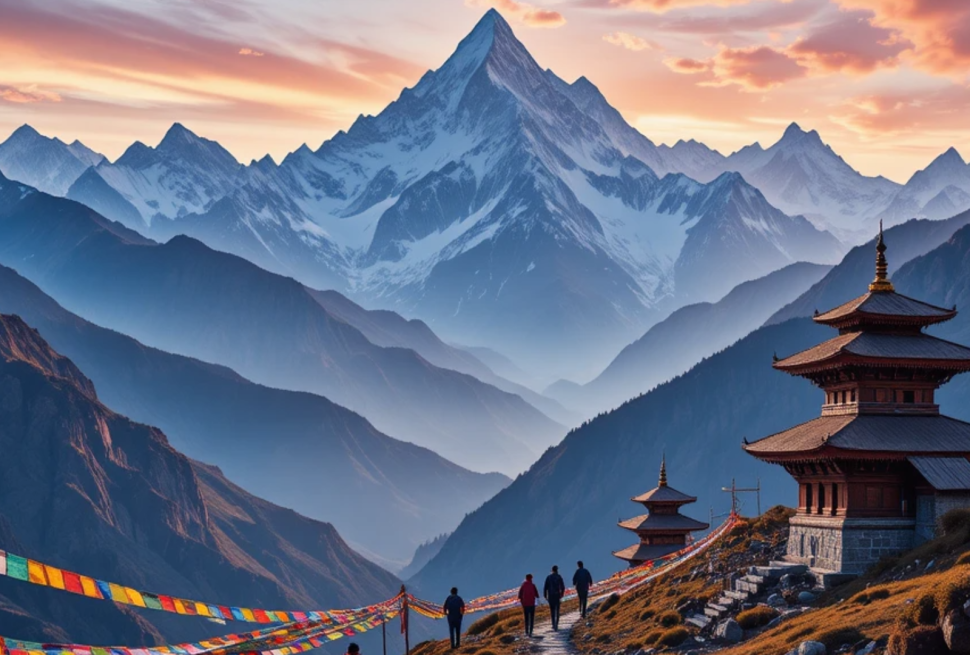
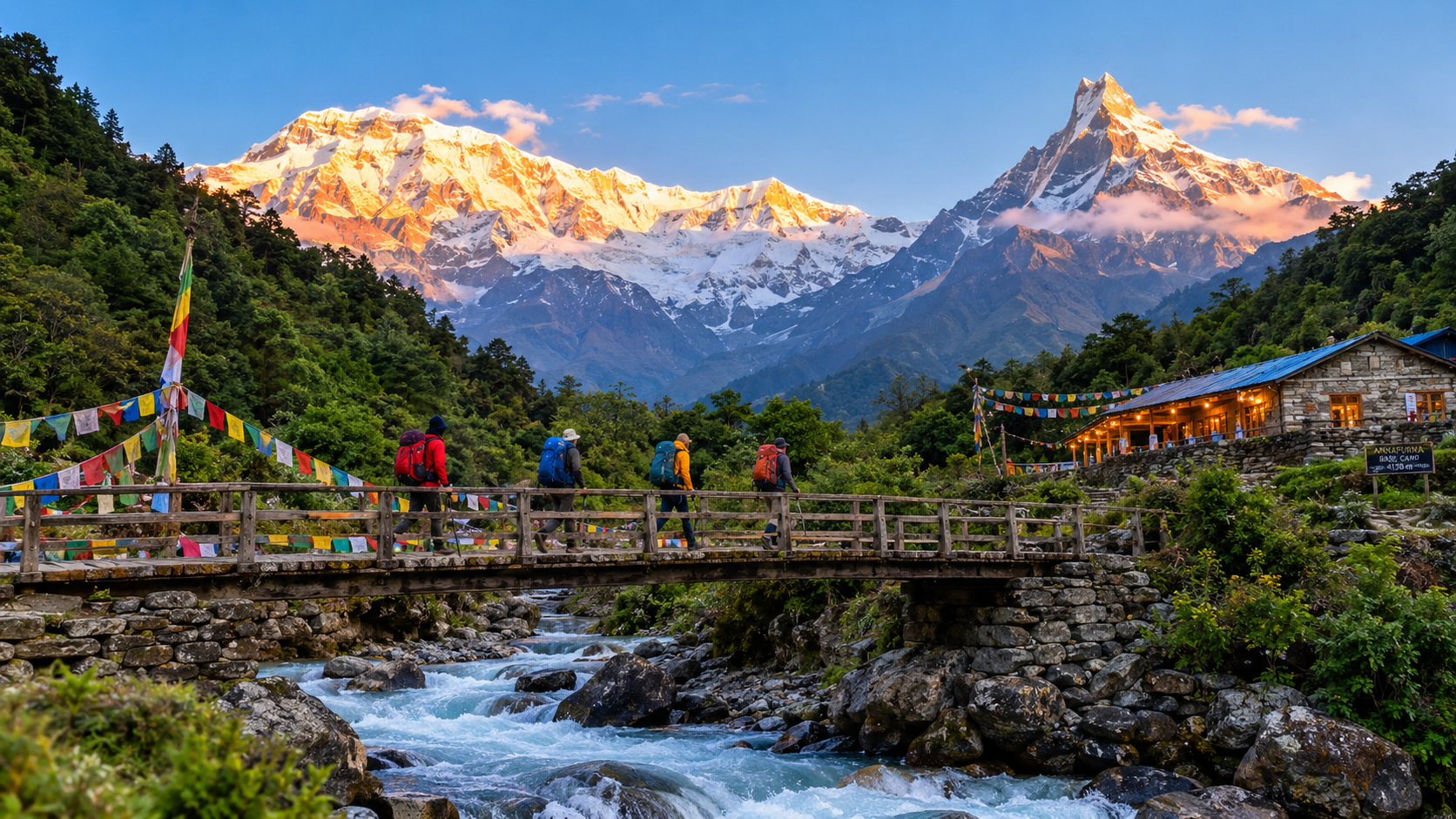
Annapurna Base Camp is a sensational destination, set at 4,130 metres within an amphitheatre of snow-covered peaks. Walkers are rewarded with views of Machhapuchhre (“Fishtail”) and the Annapurna massif that stretches away to the north-east. It is a place that puts a smile on your face, even if only for a moment.
What the Rains Did?
To put this happy news in context, here is a brief look at what happened earlier this year.
After a largely uneventful monsoon season, continuous heavy rains in mid-July caused the Kimrong Khola and the Modi river in Kaski district to swell considerably, according to local authorities. An upstream landslide may have temporarily dammed the river before the obstruction was swept downstream with the rising waters. Several reports filed shortly after the event described damage to the Ghurjung suspension bridge, erosion on the trail near Syauli Bazaar, a washout on the paved road between Nayapul, Birethanti and Ghandruk, and damage to two lodges near Banthanti. Fortunately, we did not find reports that anyone was injured in the event.
Nepal is not alone in experiencing these events this year. A flash flood in the Bhotekoshi river system in Rasuwa district in late August damaged roads and bridges along the corridor to Langtang and Gosaikunda. Operators have noted that the disaster was geographically limited, and that most other trekking regions are located in separate river systems not affected by this event. Still, for those who follow the news with concern, these reports can be troubling.
Nepal’s mountains are young, steep and generous with their water. Flooding and landslides are an annual event, and the country’s residents are largely accustomed to dealing with the effects. For trekkers, the most important thing is to not assume the worst – or the best – and to stay informed about current conditions from those who know the terrain best.
Rebuilding, One Plank at a Time
In the Himalayan foothills, a washed-out bridge is a tragedy. Not only does it cut off road access for months at a time, but it represents a severance of the ties between families and friends, between villages and markets. Children out of school, porters without work, farmers with no access to their fields – all these effects weigh heavily on the hearts of those who live in the hills.
It is little surprise, then, that the temporary bridge constructed recently represents more than a mere passage from one side of the river to the other. It is a sign of re-opening trails and renewed trade, and the welcome news for trekkers that the road from Pokhara through Ghandruk towards ABC has been reopened as well, shortening the approach to the trailheads and allowing trekkers to conserve energy for the long days ahead.
Works on the trail are often carried out in stages, with temporary structures built to restore crucial access as soon as possible. Permanent upgrades, including stone steps, widened trails, new railings and more are carried out as resources allow. As a trekker, you’ll probably notice the changes as you walk, since many of these repairs have been made by hand. New steps have been cut into the hillside or replaced large, pitted blocks of stone; trails have been rerouted around exposed rock faces and dangerous drop-offs; fresh railings have been bolted to posts and the recent scars of landslides are quickly overtaken by new greenery. All of these details represent chapters in the story of a place, and a landscape that continues to change – and to be changed by – those who walk its paths.
There is an important lesson to be learned by those who follow news reports of disaster from a distance. It is the lesson that many in Nepal have been trying to convey this year: that disaster preparedness and mitigation measures must be taken in close consultation with experts. As a result of climate change, many communities experience unpredictable weather patterns that require careful planning and upgraded facilities. For trekkers, the best way to help is by returning again and again, by staying in local lodges and by treating the trails, wildlife and people of Nepal with respect.
Why Trekkers Are Choosing Annapurna Base Camp Right Now?
There are many reasons why ABC is seeing such an uplifting increase in visitors.
The weather is fine. After the monsoon rains, the air in the Annapurna region is clear and dry, with spectacular views of the high peaks. October is considered the finest month for trekking in Nepal, and ABC is the perfect destination to experience it.
Access has been restored. With the road and bridges reopened, trekkers can travel more easily from Pokhara to the trailheads and beyond.
Trekking routes elsewhere are damaged. Local reports suggest that some travellers who had originally planned to trek in Manang and Manaslu are being diverted to ABC, due to ongoing problems with trail access in those regions. Some operators have reported that localised damage on the Manaslu Circuit was repaired in September, so conditions may vary from one source to the next. Always confirm trail conditions with your operator before departure.
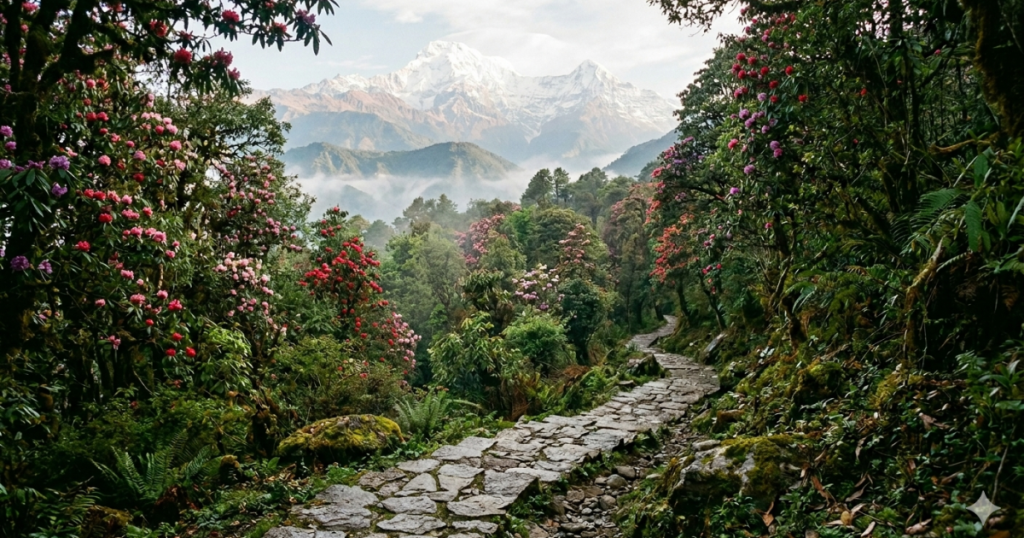
ABC is wonderfully rewarding for the effort. Unlike some of Nepal’s longer treks, Annapurna Base Camp can be reached in roughly a week to ten days, depending on the route and pace. ABC offers extraordinary variety in a short space of time, including terraced fields, rhododendron and bamboo forests, glacial moraine and high-altitude solitude.
The local culture is part of the magic. The villages of Ghandruk, Chhomrong and other Gurung settlements are known for their friendliness, hospitality and unique traditions. Stone-paved streets, slate-roofed homes, warm kitchens and the ever-present offer of a hot drink have made these places favourites of trekkers for decades.
The Trail, Step by Step
If you’ve never walked to ABC, here is a brief description of what to expect along the way. Itineraries tend to vary by operator and by the time of year, so regard this as more of a gentle overview than a detailed plan.
Pokhara to the trailhead. Most treks begin in Pokhara, the lakeside city that takes pride in its views of the surrounding peaks. The road from Pokhara leads through Nayapul, Birethanti, Ghandruk and other starting points. With the road now open towards Ghandruk, access to the trailheads should not be difficult, although conditions can change, so always confirm current road conditions with your driver or operator.
Ghandruk and the middle hills. These stone villages are some of the most photographed destinations in the Annapurna region. On a clear morning, the view of Annapurna South and Machhapuchhre from Ghandruk is simply breathtaking.
Chhomrong. Perched on a ridge overlooking a deep valley, Chhomrong is the last large settlement before the higher, more remote portion of the trek. It is also a favourite place to stop and rest, since many trekkers choose to spend their final night here. This is where Dilip Gurung, secretary of Chhomrong Tourism Management Committee, shared the positive news on visitor numbers this month.
Down into the forest. Below Chhomrong, the trail drops into the Modi River valley, passing through bamboo and rhododendron forests. These lower sections of the trail were badly hit by the monsoon rains, and may require some backtracking or rerouting. Take your time in these sections, since the trail can be slippery after rain and the forest is very pleasant to walk through.
Dovan, Himalaya and Deurali. As the trail continues to climb, the trees give way to open ridgelines and the great walls of the Annapurna sanctuary rise on either side. Lodge standards in this region are modest but welcoming, with the dining room stove as the heart of the evening.
Machhapuchhre Base Camp. At around 3,700 metres, this is the final stop before the climb to ABC. Many trekkers spend the night here and wake before dawn to make the final walk to ABC.
Annapurna Base Camp at 4,130 metres. The great peaks of Annapurna I, Annapurna South, Hiunchuli, Gangapurna and Machhapuchhre encircle the camp in a natural amphitheatre. At sunrise, even the most jaded guides will be quiet, as the first light falls on the snowfields. It is a view that will stay with you long after you return home.
Autumn Weather: What to Expect?
The weeks following the monsoon are widely considered to be the finest time of year to visit Nepal for many reasons.
The skies are clear and the air is fresh, with excellent visibility of the high peaks. Days at middle elevations are warm enough for hiking, and nights at altitude are chilly. As a rule of thumb, temperatures fall by around 1°C for every 100 metres of additional altitude. So, a light jacket or fleece will always be useful when walking above 3,000 metres. Rain is rare at this time of year, although early October can be a cloudy period with occasional showers at higher altitudes. Further along the season, a light dusting of snow on the higher peaks is possible but clears quickly.
One final word on weather: Conditions in the mountains can change quickly, and a sudden storm can cut off a trail no matter what time of year it is. This is why a good guide and a flexible itinerary are always part of a well-planned trek.
Making the Most of Your Moments at ABC?
A trek to Annapurna base camp is not a race, and many of its finest moments are best enjoyed when you take time to savour them.
Chase the light. Sunrise at ABC is one of the highlights of the trek – and one of the easiest to miss if you’re hurrying. Wake early, dress warmly and step outside while the stars are still visible. Within minutes, the first light will turn the peaks to gold. Carry a flask of hot tea if your lodge can provide one, and keep your camera or phone warm inside your jacket (cold batteries are a quick way to spoil a good photo).
Stay a little longer at Machhapuchhre base camp. Many trekkers rush through this portion of the trail, but the lights at dusk are truly magical, and the night before dawn is always worth staying awake for.
Pause in the villages. On your way up or down, take an hour or two in Ghandruk or Chhomrong and observe the local culture and lifestyle. If there are any museums or shops open for business, browse the souvenirs and gifts on offer.
Keep a small notebook. Write down the names of the people who cooked for you, guided you or made you laugh. Years from now, those names will mean more than the altitude figures.
Walk your own rhythm. The best trekkers are not the fastest ones on the trail. They’re the ones who notice the birdsong, the rhododendron leaves, the smoke curling from a kitchen chimney.
Three Hundred Trekkers a Day: Walking Kindly With the Crowd
Three hundred visitors a day is great news for the lodges, cooks, guides and porters whose livelihoods depend on trekking. It comes after a difficult summer, and a timely boost in income and confidence. It also means that the trail can get busy, and that a little forward planning can go a long way.
Here are a few tips on making the most of a busy season:
book ahead where you can, as lodges higher up the trail, especially the Machhapuchhre Base Camp and ABC, can fill up fast. Your guide or operator can usually call ahead. Then arrive early enough in the morning to beat the crowds at the best lodges, since room allocation can be fickle. Be prepared to yield on narrow parts of the trail, and to give way to porters and animals carrying loads, which have the right of way, but remember to say namaste! Be respectful of the lodges and their staff: the rooms, food and hot water in the high mountains are all precious things. Tip liberally in return for good service, and remember that everything on the menu has been carried up the mountain. Think about the timing and options to hand: if you want to avoid crowds, there may be ways of adjusting your dates, or of taking a less popular detour. Ask your operator.
Safety After the Floods: Calm, Practical Advice
It is completely understandable if you are wondering whether it is safe to trek after a year of such difficult weather. The truth is, the Annapurna region is welcoming and seeing an influx of hikers, but trekkers should also bear in mind that a post-monsoon trail has its own particular challenges. A sensible trekker will take the following into consideration: ask your operator or the Annapurna Conservation Area Project (ACAP) office about the state of the road, temporary bridge and any rerouted sections before setting off. Conditions can change from one week to the next. hire a licensed guide who knows the area and is familiar with recent ground conditions; they will be able to advise you on the best and most up-to-date way of getting around, and know where to stay out of trouble, particularly in the wake of a heavy monsoon. watch out for slippery ground on slopes and around landslides, and don’t linger unnecessarily beneath precarious hillsides. Avoid crossing ground that your guide has told you to steer clear of. be aware that altitude sickness can afflict even the hardiest of walkers. ABC is situated at 4,130 metres above sea level, so it is worth remembering to take things easy, drink lots of water and inform your guide if you start to feel any discomfort or strange symptoms such as nausea, headache or vertigo. Going down is always the best option if you start to feel unwell.
Allow yourself some flexibility in your schedule: building in a couple more days means you can always take advantage of poor weather conditions, or enjoy a relaxed morning if you feel so inclined. It can be the best way of dealing with unexpected closures too. make sure you have adequate insurance, which covers trekking to a height of at least 4,200 metres and includes emergency helicopter evacuation, if required remember that permits are required for trekking in Annapurna. Regulations and prices are subject to change, so it is always a good idea to double-check with a licensed operator before you set off.
What to Pack for an Autumn ABC Trek
Packing for a trek to ABC involves thinking about layered clothing.
- Layered clothing (moisture wicking baselayers, a warm fleece or light down midlayer, and a windproof/waterproof outer shell).
- A warm down jacket for evenings and mornings. It gets properly cold on nights at ABC and MBC.
- Well-worn trekking boots with good grip. The trails can be muddy or slippery in places after the rains.
- Trekking poles, for knee protection on long descents and to give extra stability on uneven ground.
- A warm hat, gloves, sunglasses, sun hat and high SPF sunscreen. The sun is much stronger up there than it appears.
- A reusable water bottle with purification tablets or a filter to cut down on plastic waste.
- A headlamp, for pre-dawn treks and evening readings.
- A rain cover for your pack, plus dry bags for your electronics and paperwork.
- A small first-aid kit, with blister plasters, rehydration salts, painkillers and any personal prescriptions.
- A light sleeping bag liner, to make lodge beds feel a little more homely.
Trekking With Heart: Giving Back to Annapurna
When trekkers return to an area after a difficult season, their decisions carry weight. Here are some ideas that will help you make a trekking journey that leaves a positive footprint
Stay and eat locally, in family-run lodges and teahouses. The more nights you spend and meals you share, the more families who have had a tough summer will benefit.
Hire local guides and porters. Well-equipped, fairly paid local staff are the lifeblood of the Nepali trekking industry. Make sure that porters are kitted out appropriately and have insurance, and that they take on reasonable loads
Leave no trace. Always take away your waste, or dispose of it responsibly if alternative arrangements can be made. After months of landslides and flooding, the slopes need all the help they can get
Stick to the track. Taking short cuts across slopes increases erosion, especially after torrential rains.
Listen to the stories. Ask the hosts about their summer, the bridge, and their hopes for the next season. Many are willing to share their experiences, and one of the best ways you can show support is by listening to them.
Be a considerate and patient guest. Because of the damage incurred during the monsoon, some areas may have reduced services and be unable to accommodate guests. A friendly smile and a kind word are always appreciated.
A Simple Planning Checklist
If you are considering joining a trek in the near future, here is a simple planning aid.
- Decide on the time window. These next few months are peak season, which means prices are higher and it’s more competitive. If you can, book early.
- Decide on your route and pace, and allow enough time for acclimatisation.
- Get in touch with a licensed operator. Ask them about trail, road and bridge conditions, and any detours that may be in place.
- Get your permits and insurance organised. Make sure you know the latest regulations before you depart
- Prepare your body. Get in good shape by walking regularly and taking the stairs, and practice with a heavier pack in the weeks leading up to your trip
- Pack wisely. Dress in layers, and bring a good waterproof jacket. Make sure you have a water purification system
- Allow extra days at either end of your trip in case of delays. Be flexible.
- Treat the region with respect. Remember that you are a guest in someone’s home, and that the mountains are their garden.
A Note From You
I’ve always thought that a mountain trail provides a person with important insight into the lives of those who make it their home. The Annapurna region has long been shaped by Gurung, Magar and other mountain communities who know the intricacies of the weather far better than any forecast can hope to capture. When the rivers swell, they mend. When the tracks are washed away, they walk new ones. And when the visitors arrive, they boil the kettle.
This spirit is what lies at the heart of this autumn season, where numbers are looking good (around 300 trekkers a day are reaching the ABC area), but it’s in the quiet moments that the real message is conveyed. It is seen in the laying of bridge planks, the laughter in a lodge kitchen, and the tired but joyous face of a trekker who has reached the end of a winding trail and looks up to see the great mountains all around them.
If you’ve been waiting for a sign, here is one. The trail beckons. The skies are clear. And the people are ready.
Closing Reflection
The monsoon taught the Annapurna region a lesson this year, but it has also shown the world a remarkable spirit of resilience that lies at the heart of the region and the people who call it home.
After torrential rains, the mountains are at their finest. The air is clean, the light is soft and golden, and the great white peaks seem within reach. Behind every trail are the people who made it possible, and in front of you is a view that has captured the hearts of generations of travellers.
So come with curiosity and patience, and with a flexible plan. Say namaste often, and tread lightly and listen closely. And take your time, lingering a little longer over your tea.
Annapurna is waiting for you. All you have to do is take the first step.