

Introduction
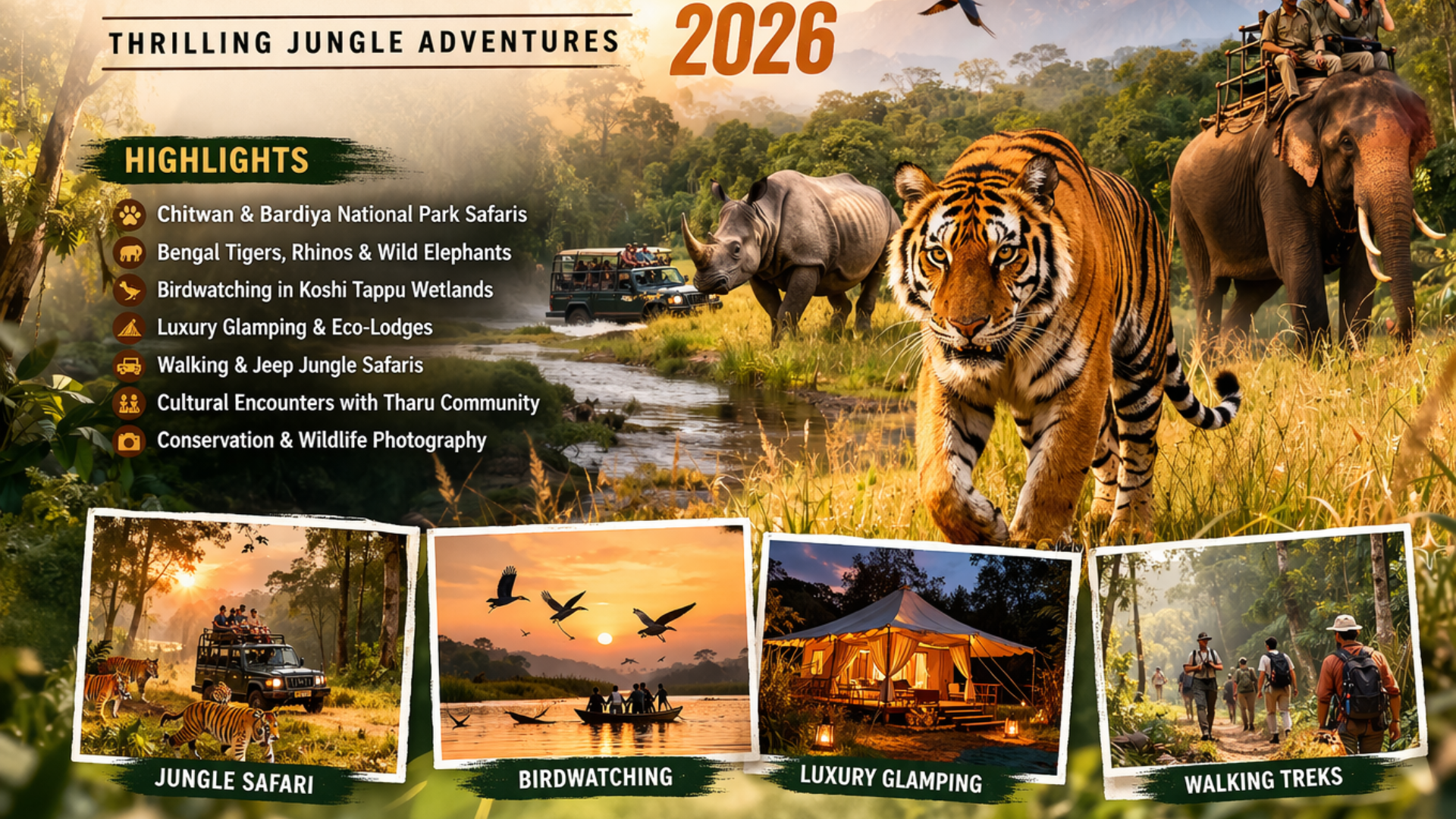
Nepal Wildlife Safari 2026: Thrilling Jungle Adventure, Nepal flows with clear rivers, thick woods, close-knit villages, old ways. Not only do hikers find joy here – those chasing wild moments discover something bold too. Instead of crowds, think quiet mornings where tigers move like shadows through tall grass. Rhinos stand near water holes under golden suns while feathers flash in tree canopies above. Picture yourself still, watching life unfold without noise or rush. Cameras click softly, yes – but eyes remember longer than lenses ever could. Each trail leads somewhere real: marshlands hum at dusk, hills echo with unseen steps. Evenings bring campfires, stories shared across languages, warmth passed hand to hand. This isn’t about ticking off sightings; it runs deeper. Nature speaks slowly – and those who listen begin to understand differently. Wildlife thrives across Nepal’s protected lands, where varied habitats shape distinct adventures. First among them stands Chitwan National Park – recognized by UNESCO – for its deep jungles and thriving animal life. Thick groves of sal trees mix with marshy fields and flowing waterways, drawing creatures like rhinoceroses, tigers, deer that haunt wet meadows, even wild elephants. High above the undergrowth, riders seated on elephants start their journey into green silence, peering down through leaves at motion below. Speed draws adventure lovers toward jeep rides that reach far spots quick, where shy hunters might show. Waterways here pull gharials, playful otters, plus flocks of winged visitors – cameras click often under these skies. Eastward lies Bardiwa National Park, often overlooked but rich in animal life. Though quieter than Chitwan, it pulls visitors into deeper contact with wilderness. Tigers roam here in good numbers, along with herds of wild elephants. Swamp deer step lightly through wet meadows, while gaurs stand thick in forest clearings. Monkeys chatter across different tree levels, each claiming their own layer of green. Flooded fields shift into open grassland, then melt into heavy woods – each turn brings a new scene on foot or by jeep. Spotting rare birds might excite those who love watching them, especially the Bengal florican – ranked among the planet’s most at-risk avian species. Traveling through Bardiya with a guide focuses on finding animals, yet weaves in visits to Tharu villages where life unfolds alongside wilderness.
Out past dawn-lit fields, Koshi Tappu waits – wetlands humming under open skies. Bird watchers find themselves drawn there, eyes lifted. Over four hundred kinds of wings roost here, some flying south when cold air settles. Winter brings travelers with feathers too. Swamp deer slip through reeds where few see them. Wild boars root near tangled banks. Jackals move quiet at dusk. Instead of jeeps, boats glide low on slow currents. Water becomes a path into hidden corners of life. Mornings paint gold across ripples as birds burst upward in scattered lines. Evenings fold color into shadow just as silently. Light bounces off the river like sparks before dark.
Highlights For Thrilling Jungle Adventures
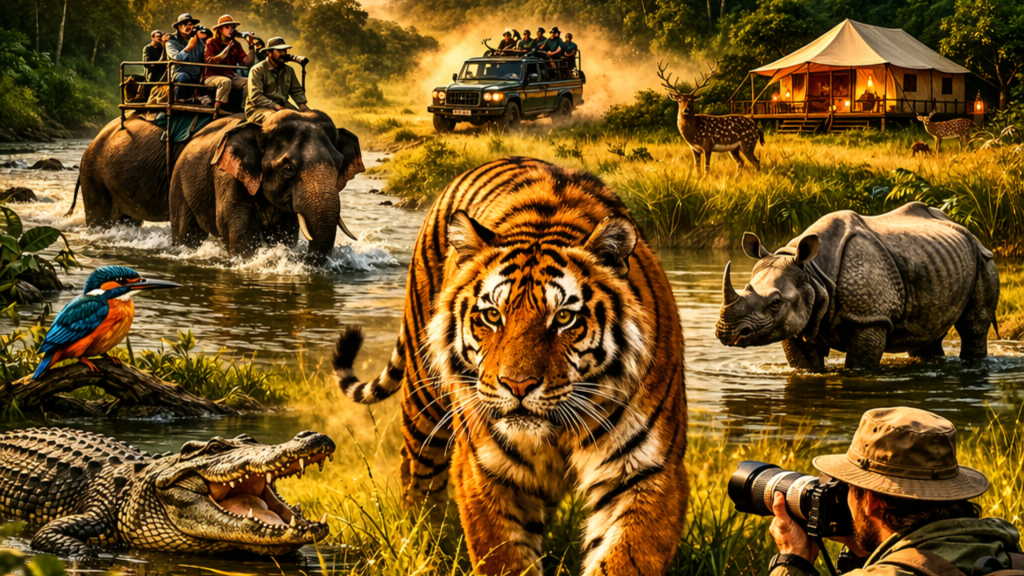
- Footsteps echo near thick jungle grass where elephants move slow through marshy trails. A vehicle bumps along dusty paths, eyes scanning for striped shadows beneath tall trees. Crocs lie low in muddy water, half-hidden but watching. Birds call from high branches, flashes of color darting between leaves. Each turn brings something wild into view – unplanned, never staged.
- A journey through Bardiya National Park brings close encounters with tigers moving silently through tall grass. Elephants appear suddenly along riverbanks, their presence hard to ignore. Swamp deer leap across open meadows at dawn light. Culture pulses strongly here, shaped by generations of Tharu traditions unfolding without pause.
- Away from the crowds, Koshi Tappu unfolds on slow river currents where boats glide past herds of water buffalo. Birds arrive from distant cold lands, settling in reed beds at dawn. Life thrives where marsh meets sky, unseen until you pause long enough to watch. Shapes move through mist – deer, egrets, crocodiles – all part of a rhythm older than roads.
- Away up high, animals live where the air gets thin. Snow leopards move quiet through rocky slopes. On cliffs, wild goats called tahr stand still like stone. Musk deer step softly in hidden clearings. Bright birds dart above meadows when sun hits morning frost.
- Under the canopy, sleep in green cabins built with care. Through trees, follow paths that lead to quiet moments beside wildlife. Among leaves, find rest in shelters made to blend slow into nature. With every breath, feel air rich from forest life while resting on soft linens. Near streams, unwind in spaces shaped by earth tones and open skies.
- Pictures of animals work best when the sun hangs low. If mornings suit you, that is when wings stir in golden light. Some groups teach how to frame what moves quietly. Birds not seen often appear where patience stays.
- Meet people where they live. Festivals bring color to daily life. Taste meals made the old way. Craft markets show hands at work. Moments happen around shared tables.
- Start with rhinos making a comeback. Their numbers rise after years of decline. Then consider tigers – more now than before, thanks to protected areas. Efforts against poaching play a role too. Some regions report fewer illegal kills. Progress shows up slowly, but it is there. Not everywhere wins, yet certain places prove change possible.
- Bounce along on a canoe or drift by motorboat through winding waterways where crocs sunbathe on muddy banks. Glide past reeds hiding otters that dart between shadows. Birds lift from shallow pools – herons, kingfishers, egrets – all stirred by quiet paddles. Water reflects sky like cracked glass under slow-moving crafts. Life thrives where land almost turns to liquid. Some creatures stay hidden until movement gives them away.
- Footsteps crunch leaves underfoot when you step into green trails led by local guides. Following animal marks on soft earth becomes a quiet kind of listening. Forest noise wraps around you – bird calls, rustling branches, distant howls. Each path moves at the pace of breath and curiosity.
Not just the steamy southern plains hold wild encounters in Nepal. Up among the towering peaks, Sagarmatha National Park unfolds a rarer scene. Famous for Everest, yes – yet it shelters elusive creatures too, like the snow leopard, sure, but also mountain goats called tahr and small forest dwellers known as musk deer. Walk those thin-air trails, and you see survival written in every hoofprint, each hidden path shaped by cold and height. Spotting animals here happens less often compared to the Terai, yet catching sight of a shy snow leopard still sends a jolt through your chest. A Himalayan monal – its feathers flashing like wet rainbows – can stop you mid-step on a trail. Moving across rugged paths while watching creatures unfold around you changes how you breathe, think. Each step forward becomes something more than exercise; it pulls meaning from thin mountain air.
Out here, where tall grass meets misty mornings, some safaris trade ordinary tents for spacious ones filled with soft linens and warm lighting. Picture this – steam rising off your morning tea as you spot a rhino moving slow through golden reeds. Instead of driving far after sunset, people rest inside canvas homes that come with real beds and water heated by solar power. Near park gates, certain lodges blend into the landscape, using local stone and wood, serving meals made from nearby farms. Staying there means fewer footprints left behind, more funds going to rangers who guard against poaching. Far from roughing it, these nights still carry the sounds of crickets, geckos, wild calls – all part of the draw.
Nepal’s wild creatures go far beyond big animals. Home to countless bird species, it also shelters many kinds of reptiles and bugs. High in the mountains, you might see the colorful Himalayan monal – that one’s the national bird. Hornbills call from treetops, egrets stand still near water, kingfishers dive fast, plus white-rumped vultures cling to survival. Snakes like pythons and cobras slip through thick forests, while monitor lizards crawl across riverbanks. Tiny wings flash in sunlight – butterflies and unseen jungle insects wait for patient eyes behind a lens. Out there, guided walks unfold slowly – led by sharp-eyed guides pointing out how animals move, survive, feed. These moments shift attention away from mere sightseeing toward something deeper: understanding habitats, spotting tracks, noticing quiet changes in terrain. Learning happens quietly, woven between footsteps and stillness. Excitement stays, yet now it carries weight, a kind of awareness that lingers after the journey ends.
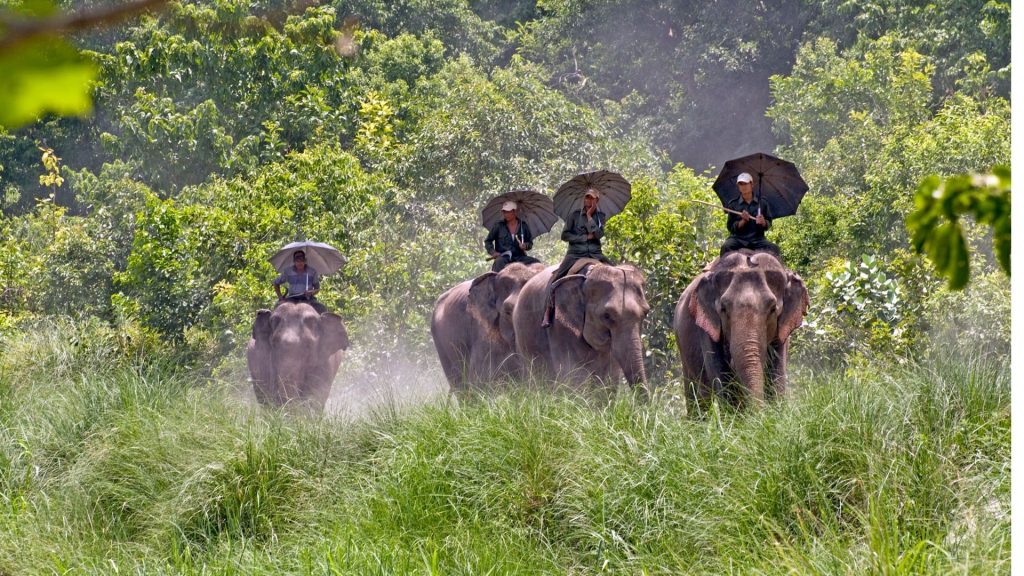
What stands out about Nepal’s wildlife safaris is how they show real wins in saving animals. Not long ago, the one-horned rhino was nearly gone – now it thrives, thanks to strong care in places like Chitwan and Bardia. Bengal tigers are also making a comeback, helped by patrols against hunters and safer living spaces. People exploring these areas join walks and talks that quietly teach why some creatures need extra protection. Seeing such change up close changes something inside – respect grows where curiosity once stood alone.
What feel like Wildlife safaris in Nepal?
Wildlife safaris in Nepal feel different because of the country’s deep-rooted cultures. Close to several parks live village communities, like the Tharu people in Chitwan and Bardiya, whose lives have long moved alongside animals in the wild. Guests might join a festival, watch handmade crafts take shape, or hear stories passed down through time. Sitting together for food with locals, or stepping into a dance or song, brings something real to the trip – more than just spotting tigers or rhinos. Instead of only focusing on beasts in bushes, travelers walk away carrying voices, colors, tastes. It’s this mix – one part forest, one part human rhythm – that sets Nepal apart when it comes to exploring wilderness.
October brings cooler days perfect for walking through southern parks where rhinos move near water sources. Though winter months offer clear skies, mornings begin cold so layers matter most. Spring light paints mountain forests gold just as snow leopards descend toward rocky outcrops. Because trails vanish under monsoon rains, visiting between June and early September becomes tricky. Expert guides know animal paths invisible to untrained eyes yet never approach too close. Responsible operators follow quiet movement rules that protect both visitors and creatures alike. Autumn air carries crispness while deer herds gather on open meadows below forested slopes. Each park holds different species so choosing one depends on what you hope to witness. Trained spotters recognize bird calls at dawn even when leaves hide their shapes completely. Weather shifts fast above tree line therefore timing your trek demands attention.
Early mornings bring soft light, perfect for snapping animals near water edges. Capturing motion in flight means timing your shots just after dawn from a quiet boat. Anyone behind a lens might find rhino silhouettes at golden hour worth the wait. Instead of rushing through trails, slow movement helps frame tigers within jungle shadows. Zooming in on far peaks demands gear built for distance, especially above tree lines. Some tours include hands-on photo help so guests learn while they walk. Colorful wings flash between green leaves when sunlight cuts through mist. Behind every strong image could be patience taken during still forest hours.
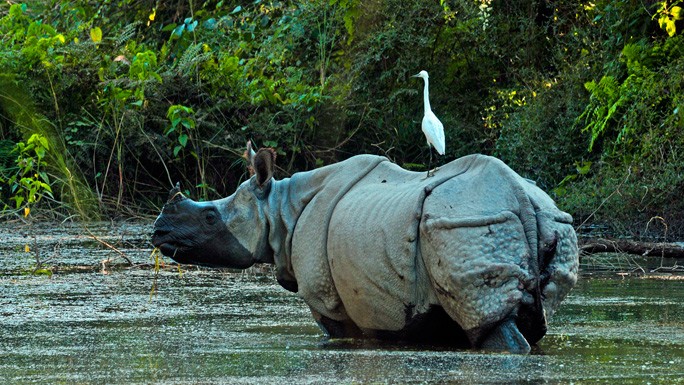
Besides safaris on foot, travelers find river trails in places like Koshi Tappu and Chitwan. Water routes wind through marshy areas teeming with life. Paddling gently past reeds brings glimpses of gharials sunning on mudbanks, playful otters diving under ripples, flocks arriving from distant skies. Silence wraps around you while floating, motion steady, senses tuned to flickers above waterline. Each journey reveals how terrain shifts – from lowland meadows humming with insects to icy streams cutting across mountain slopes. What sticks is not just sight but feeling: immersion without spectacle, pace matched to nature’s own.
Wildlife travel in Nepal now focuses on long-term care for nature. Safari companies team up with rangers to reduce footprints, keep spaces clean, because they teach guests how animals need space. Some trips plant saplings, involve villages, spread word against illegal hunting since awareness grows slowly. When people join these safaris, they help shield rare creatures while keeping forests whole along with jobs nearby. Because of this way of traveling, Nepal’s wild moments might still exist later on.
Jungle treks in Nepal go beyond watching wildlife – they open a quiet door to nature’s rhythm. Guided on foot by experts, travelers feel the wild unfold slowly: rustling leaves hint at nearby deer, fresh rhino prints mark soft ground, damp soil carries the scent of recent showers. Moments like these stay long afterward, shaping how people see ecosystems. Families move together through tall grass, small teams pause at bird calls, individuals absorb stillness alone – each finds something real. Footsteps become teachers here, revealing what vehicles often miss.
A full Nepal wildlife safari wraps together exploration, learning, and ease. Airport pickups kick things off, followed by entry passes, expert-led outings, stays, food, along with local experiences woven through. Some might tack on photo sessions, upscale tent camping, or longer hikes into protected zones if they wish. Tailored plans let people shape days around what excites them most – no need to push beyond personal limits. Three days in Chitwan, a week roaming Bardia, even mountain trails chasing rare animals – all paths exist here for different tastes.
What Wildlife safaris in Nepal offer ?
Wildlife safaris in Nepal offer more than just sightings of famous animals. Through quiet mornings, the land wakes with movement and sound, revealing how creatures rely on one another. A group of elephants wading across a river catches the eye, while nearby, a tiger slips unseen into thick forest cover. High above, a tired migrant settles into reeds at dusk, completing a long journey. These moments speak without words, shaped by struggle, balance, and unexpected grace. Every path taken tells a different version of the same truth.
Getting to Nepal is simple for visitors from abroad thanks to busy airports in Kathmandu and smaller ones close to major nature reserves. Visa setup takes little time, while local guides who speak English wait nearby when needed. Safari companies usually cover everything – permits, stays, transport – in one smooth bundle. Booking early helps lock down spots, especially when animals draw big crowds later in the year. Thinking ahead means fewer hiccups, better rest, and a sharper look at wild creatures up closely.
Conclusion
There’s something wild waiting around each turn in Nepal, where jungle floors rumble under tiger steps and mountain peaks glow above silent snow leopards. Deep in the south, thick forests hum with movement – rhino hides near waterholes while bird calls stitch through dawn air. A morning might start knee-deep in marsh grass, another atop a ridge catching wind off Tibet. Cameras click, yes, but eyes stay wider open longer than lenses ever capture. People come for animals first, then find themselves caught by village songs or river rhythms they never expected. Life piles up fast when elephants walk past your tent at dusk. This isn’t escape from the world so much as stepping into its louder, brighter core. Each trail bends toward surprise – feathers, footprints, breath in cold air. Even stillness feels alive here, pulsing below quiet.


