
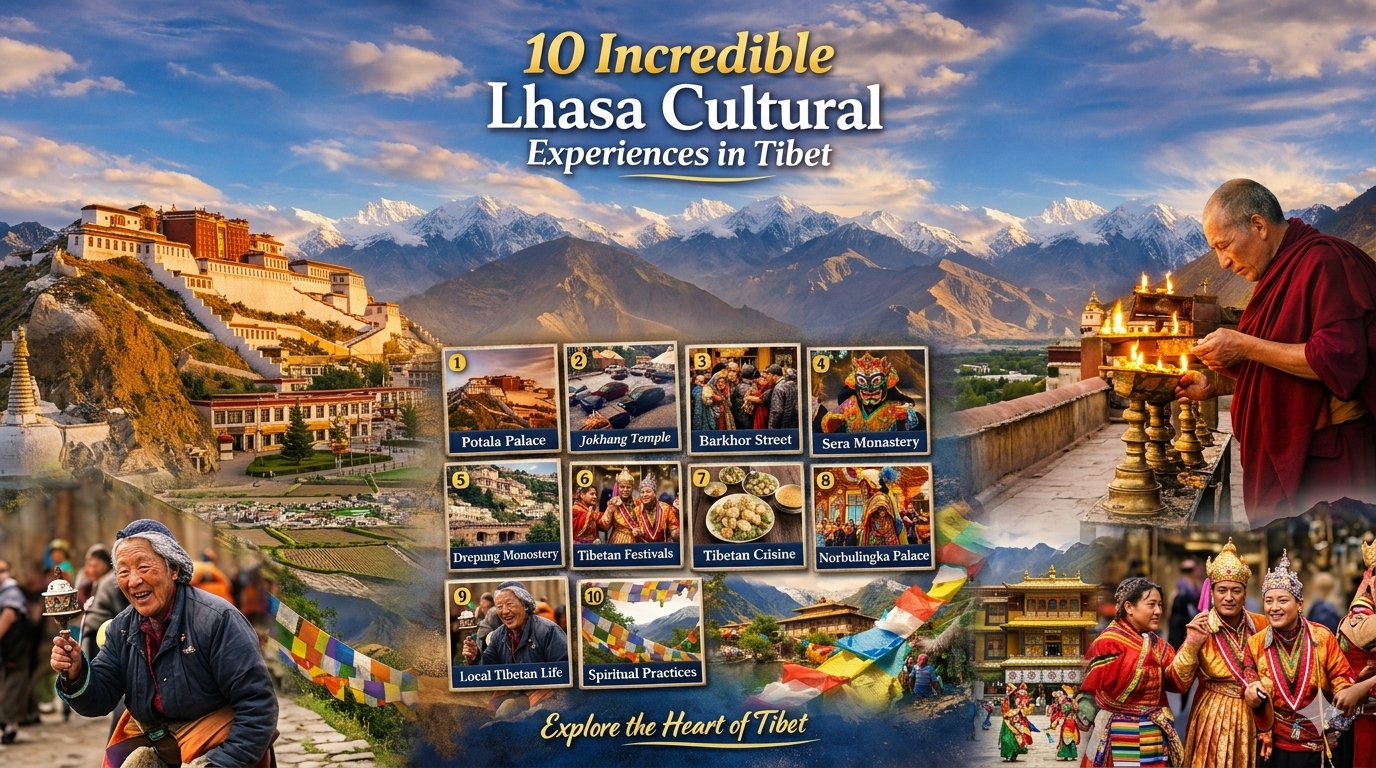
Introduction: 10 Incredible Lhasa Cultural Experiences in Tibet
10 Incredible Lhasa Cultural Experiences in Tibet, like a quiet pulse of old beliefs and long-held ways. Not merely stone paths and temple roofs, it breathes with stories passed hand to hand across lifetimes. Instead of modern rush, you find prayer wheels turning at dawn, voices rising slow beneath golden rooftops. Because faith threads through every alley, even air feels thick with presence. Though surrounded by peaks, the city’s depth lies below surface – buried in chants, butter lamps, worn steps. When sunlight hits Potala Palace, shadows stretch like memories refusing to fade. Yet beyond postcard views, people live rhythms unchanged for generations. So silence speaks louder than noise here, where ritual shapes each morning and dusk. As if time folded inward, the past stays close, never distant or forgotten. Then again, visitors leave carrying weight not of souvenirs but of stillness. Outside stone temples where voices rise like morning smoke, Lhasa hums with quiet purpose. Paths worn by centuries guide those who walk them, not because they must, but because something pulls them forward. In open yards, robed figures challenge ideas aloud, their hands sharp with gesture, while nearby a woman turns brass wheels without looking up. Warm cups pass between neighbors; steam carries salt and calm through cold air. This place does not call out loud, yet draws some deeper anyway – not just seekers, though they come too, but anyone willing to slow down long enough to notice how time moves differently here.
Lhasa holds moments that stay long after you leave. Ten paths unfold through traditions shaped by silence, altitude, and sky. Each step shows a different face of Tibet’s heart. One moment follows another without hurry. Stone walls carry chants older than memory. Visitors find themselves walking slowly, listening more. Color appears where least expected – flags strung across valleys, robes against stone. Time bends near temples built into cliffs. Stories pass between generations in gestures, not words. Some truths are felt before they’re known.
1. Potala Palace spiritual presence
High on Red Hill, the Potala Palace greets every traveler to Lhasa with silent grandeur. Once home to the Dalai Lama during colder months, its massive structure speaks volumes about Tibet’s spiritual heart. White and crimson walls climb into view, stark beneath the clear mountain sky. Few places in Asia deliver such a sudden rush of wonder.
Twisting passages unfold within, where prayer rooms glow beside gilded domes, painted walls whisper old tales, while brittle pages rest behind glass. Centuries press into every carved pillar, each fresco shaped by hands long gone. Hushed steps echo under low ceilings, mingled with the rich smoke of burning butter wicks lighting the way. More than stone and memory, this place breathes quiet faith – Tibet’s heart beating slow beneath worn floors.
2. Devotion at Jokhang Temple
Deep inside Lhasa rests the holy Jokhang Temple, held highest in honor among Tibetan Buddhist places of worship. Constructed long ago under King Songtsen Gampo’s rule, back in the 600s, its walls carry weight far beyond stone and wood. People come from distant villages, sometimes walking for weeks without pause, drawn by something deeper than habit. Their steps lead them toward one image above all – the figure called Jowo Rinpoche, said to show how Buddha looked when he was just a boy. Though time wears on, the quiet awe around it never fades.
Coming near Jokhang Temple, you feel something shift in the air. Along the stony lanes of Barkhor Square, worshippers press themselves flat again and again, each motion shaped by quiet resolve. Prayer wheels turn with a steady beat while smoke curls upward, mixing with murmured prayers drifting through courtyards. Instead of walking alone, joining those circling clockwise pulls you into moments that simply unfold – rituals lived, not observed.
Down a shadowed hallway, soft light wavers from small oil flames along the walls. These narrow paths guide visitors past old rooms filled with detailed wall paintings, gilded figures, while silence holds weight. Within the deepest chamber sits the Jowo Rinpoche image, drawing those who come close to place silk cloths, burn lamps, whisper words meant only for gods. Devotion gathers here, slow and steady, among bowed heads and quiet breath.
Pacing through Jokhang Temple feels less like touring, more like stepping into breaths taken long ago. Because it carries UNESCO recognition, its weight in history quietly presses on every visitor. While some come for answers, others arrive with none – both find moments that linger past departure. Devotion here moves slow, seen in flickers of butter lamps, worn prayer beads, footsteps smoothed by time
3. Follow the Ancient Path Around Jokhang Temple
Barkhor Street wraps around Jokhrang Temple, serving as a spiritual trail while also buzzing with market life. Moving along this holy loop beside residents offers a rare glimpse into real Lhasa moments. Though quiet at dawn, voices rise by midday – prayers blend with barter. Each step forward feels less like sightseeing, more like stepping inside a long-held rhythm.
Step by step along the path, voices rise in steady chant beside spinning prayer wheels. Shops built low and close hold bright strings of fabric fluttering above doorways. Painted cloths hang on one wall while necklaces rest on another surface nearby. Incense curls up near baskets full of beads and small tools. People pause mid-step to speak with neighbors or sip tea outside their doors. Moving slowly through it, details stick without needing names. Sounds blend into a background that feels both old and present.
4. See Monks Living at Sera Monastery
Situated just north of Lhasa’s edge, Sera Monastery rises among Tibet’s most renowned centers of monastic learning, giving those who visit an intimate look at how Tibetan Buddhist scholars live and think. Established in 1419 by Jamchen Chöjé – himself a student of Tsongkhapa – it didn’t take long before it drew crowds of monks eager to dive deep into texts, contemplation, and ritual life. Midday light filters through trees at Sera Monastery, where debate unfolds like clockwork. A lone figure rises, palms crashing together loud enough to startle birds from branches. Across from him, another sits steady, answering with quiet precision. Centuries have passed, yet these exchanges remain unchanged – rigorous mind workouts disguised as conversation. Questions fly about truth, self, right action, rooted deep in ancient teachings. That sharp clap? It slices through confusion, meant to shock dull thinking awake. Sitting still is just as vital, grounding each reply in thought rather than impulse. Movement and silence work together, one tearing down illusion, the other building insight.
Away from arguments, Sera Monastery reveals daily routines behind cloistered walls. Step inside, see meeting rooms lined with old painted scenes, huge figures carved in wood, shelves stacked with scrolls bundled in fabric. While voices drone low through corridors, air thickens with melted oil smoke, eyes catch scholars bent over books or kneeling with beads. Stillness lives here, though minds stay sharply awake.
One step inside Sera Monastery shifts your view – suddenly it’s clear how learning, routine, and belief fold into daily life here. Far from silent halls, the place hums with voices debating old texts, challenging ideas, holding them close across time.
5. Drepung Monastery Stands Amid High Valleys
High up on a hill near Lhasa, Drepung Monastery spreads wide under open skies. Back then, more than ten thousand monks lived within its walls, studying and meditating through long seasons. Though quiet now, it still holds the weight of deep knowledge passed down for centuries.
Among towering walls, prayer spaces open one after another, leading past gathering spots where voices sometimes rise then fade. Monks sit in stillness, deep in learning, tucked into shaded alcoves that hold little sound. Outside, wide sights stretch across the valley floor – endless sky meeting distant ridges. This place breathes slowly. Culture lives here quietly, found between steps, not announced. Peace arrives without warning, brought by silence more than stone.
6. Experience a Traditional Tibetan Festival
Festivals pull you into Tibet’s rhythm when planned right. Shoton means yogurt feasts under open skies while dancers wear faces made of cloth and sound. Losar arrives with fresh firewood stacked by doorsteps, horns calling before dawn. Celebration here moves through streets like wind – loud then quiet again.
Lively now, monasteries fill with chanting and movement as monks dance in vivid masks, acting out ancient wisdom through gesture and rhythm. Crowds arrive dressed bright, standing close, passing bowls of food while voices rise together. Joy hums here – it’s where tradition breathes loud, seen whole, felt deep.
7. Taste Authentic Tibetan Food
Up on the plateau, meals in Lhasa grow out of thin air and old ways. To taste what locals eat is to step into the trip itself. Try momos, those steamed dumplings, then move to thukpa – warm noodle broth that comforts. Roasted barley flour, called tsampa, often shows up at meals, earthy and filling. Yak butter tea might hit strange at first, salty and rich, yet it fuels many high-altitude days here. Sit in small village spots where bowls are handed warmly, voices humming nearby. Each bite pulls you closer, not just to food, but to how people live, share, survive. Flavor carries story more than spice ever could.
8. Explore Norbulingka the summer retreat
Norbulingka means “Treasure Garden” – once the summer home for Dalai Lamas. While Potala Palace rises high above the land, this place stays close to earth, calm and shaded. Green stretches wide here, threaded through with still water and dotted with quiet buildings where people used to rest.
Finding your way along quiet paths, old walls rise beside halls filled with color and pattern. When celebrations come around, people fill the courtyards, sharing songs and stories under open skies.
9. Experience Daily Life in Tibetan Communities
Wandering past ancient stones, you start noticing faces more than facades. A quiet moment watching someone pray can say far more than signs ever do. Listening to laughter in alleyways often reveals what guides a city’s soul. Moments between strangers sometimes hold the deepest lessons.
Older Tibetan men and women turn prayer wheels slowly, their hands worn but steady. Meals bring people together, laughter rising between bites of steaming food. Craftsmen shape wool, metal, wood – each piece holding quiet stories. A glance exchanged on a street corner carries more than words ever could. Time here moves differently, measured in gestures, not clocks. What stays long after leaving are these small moments, unscripted and real.
10. Tibetan Spiritual Practices
Pieces of cloth hang like whispers across mountain passes. Smoke climbs slow from stone courtyards where old stones remember footsteps. Each corner hums something quiet, felt more than heard. Colors fade under sun but never meaning. A rhythm stays, even when silence comes.
Watching monks light butter lamps might strike you first. Chanting fills corners of temples, steady as breath. Meditation draws people in, quiet-like. Steps along Lhasa’s paths seem guided by more than feet alone. Each turn hums with unseen weight. Meaning sticks to stones, air, silence. This place does not shout – just stays, deep and slow. Tibet speaks without words, if you let it. The heart hears clearer here
Lhasa cultural tour packages
Step inside Lhasa through travel plans built around its soul rather than just sights. Potala Palace rises first, then Jokhang Temple appears, followed by quiet steps at Sera Monastery. Festival moments slip in beside meals of tsampa and butter tea, shared slow with families. Mountains frame everything, not as backdrop but presence, felt in every walk beyond city edges.
Lhasa cultural tour itinerary
A trip through Lhasa culture plus the Langtang Ri trek leads deep into Tibet’s soul, built around real moments with history and belief. Starting usually in Lhasa, people step first into the towering Potala Palace – once home each winter to the Dalai Lama – and feel time slow down. Next comes the Jokhang Temple, glowing with butter lamps, where pilgrims gather like they have for hundreds of years. Along Barkhor Street, crowds move in circles, turning prayer wheels while bowing low; life unfolds without rush here. Each footstep on these stones meets echoes of ritual passed hand to hand across generations.
Footsteps lead next to ancient monasteries – Sera stands quiet at first glance, yet hums with debate among robed figures beneath golden roofs. Drepung spreads across the land like a village of prayer, its halls holding knowledge passed down long before modern times. Walkways open onto Norbulingka, where summer breezes once greeted spiritual leaders amid blooming trees and still courtyards. Gardens wrap around palace walls, each path telling how life unfolded away from crowds, shaped by ritual and seasons.
Taste real momos, thukpa, because yak butter tea flows here too. If days line up just right, a festival appears – masks move slow, drums echo beliefs older than words. This path suits those drawn to quiet temples plus streets alive with prayer flags. History lives loud in alleyways, while monks chant routines unchanged for centuries. Lhasa breathes its truth through kitchens, doorsteps, rooftops where stories pile like old scrolls.
Conclusion
Lhasa doesn’t simply sit on the map – its presence pulls at you, quietly. Beneath worn prayer flags, culture breathes through stone walls and mountain air instead of staying locked in books. Spiritual weight lives in cracked hands spinning wheels, not just in temples raised high. Old customs move slowly here, resisting rush, insisting on attention. Palaces rise like echoes of another time while silence between chants speaks louder than words. Each step taken along dusty paths uncovers pieces of Tibet that refuse to be forgotten.
Diving into these 10 rich cultural moments pulls you past regular tourism straight into the heart of Tibetan life. When spirituality calls, or when old stories pull at your mind, Lhasa opens doors without signs. Wonder shows up quietly here, tucked beside long thoughts and images that stay put in your memory. Instead of checking sights off a list, time slows down, lets you feel more than see. Curiosity leads just fine – no map required – through alleys where silence speaks first. Moments stack not because they’re grand, but because they’re real. History lives in gestures, not books, whispered through tea rituals and morning chants. Even small details leave marks: worn stone steps, prayer flags fluttering like breath. This place does not shout; it lingers. What stays behind is never what you planned to carry.
Walking away from this holy place, your hands hold photos, yet something deeper stays close – quiet moments settle inside, peace slips into your steps. A culture unlike any other leaves its mark, not loud but sure, shaping how you see long after you go.
FAQs
What is the Culture of Lhasa?
Spirituality shapes Lhasa more than almost any other place, fed by centuries of Tibetan Buddhist practice. Though often called a capital, its real identity lives in temples and quiet courtyards where chants echo at dawn. Inside Jokhang Temple, smoke curls around old stones while pilgrims circle with steady steps. You’ll find Potala Palace rising above rooftops – a fortress of faith-built layer by layer through time. Monks gather in open yards arguing philosophy, their voices sharp against stone walls. Around them, prayer wheels turn under fingertips, each spin said to carry words skyward. Some travelers crawl forward on hands and knees, touching earth between movements as an act of surrender.
Art appears everywhere – not just on temple murals but stitched into robes and painted on scrolls known as thangkas. Festivals burst forth in waves: masked dances during Shoton, firelight glowing behind paper lanterns at Losar. Life moves without hurry here; people drink salty tea made from yak butter before heading out in long woolen coats called chuba. Even small routines hold meaning – the way incense burns near doorways, how elders nod toward stupas when passing. Belief isn’t separate from living – it threads through markets, meals, morning light falling across worn prayer beads.
What is the Main Culture in Tibet?
Out in the mountains, life moves with the rhythm of Buddhist belief, guiding how people learn, live, together. Found along paths and rooftops, fluttering cloth signs carry wishes written on them – prayer flags hung by hand. Mani stones stack beside trails, carved slow and steady, each one holding words that mean care for others. Spinning cylinders turn under fingers, round and round, carrying prayers into quiet air. The chant “Om Mani Padme Hum” echoes in courtyards, spoken soft or loud, full of feeling. Monasteries sit perched above valleys, centers where thought grows deep, teaching passed face to face. At high heights, breath comes short – the land shapes what people eat: barley flour mixed with warm water, thick drinks made from yak milk.
Clothes hang heavy to fight cold winds, wool layered against sky-wide chill. Losar brings new year light, faces painted bright, families gathering without rush. During Saga Dawa, walks circle holy sites, steps marking reverence, done in stillness. Shoton fills open spaces with masked dancers moving old stories through gesture and drum. Simple ways stay valued here – not much wanted beyond need, balance kept between person and earth. Even now, with changes near, kindness stays central, tradition held close, spirit present.
Why Do People Go to Lhasa?
Lhasa pulls travelers in – not through noise, but quiet strength. Its air hums with chants near Potala Palace, rising like stone prayers into the sky. Jokhang Temple breathes slowly, filled with bowed heads touching ground, one after another. Devotion here isn’t performed; it seeps from worn stones, flickering lamp flames, hands turning brass wheels. Monks shout questions in courtyard debates, voices sharp against ancient walls. Festivals arrive without warning – drums first, then color, then laughter woven into long silk scarves. Butter lamps glow at dawn, lit by fingers cracked from cold and time. To eat tsampa or drink salty tea is to step closer, not just watch.
Faces soften when strangers sit quietly among them. High above sea level, the land spreads flat before jumping into mountain teeth. Stillness settles differently here – less empty, more full. Visitors leave quieter than they arrived, carrying something unnamed. Each moment stays grounded, never rushed, shaped by centuries that refuse to hurry. The altitude stings, yet somehow makes everything clearer. Faith walks barefoot on sun-warmed flagstones, repeating, returning, resting.
What language is spoken in Lhasa?
Folks in Lhasa mostly talk Tibetan – that’s the local version known as the Lhasa dialect, part of Central Tibetan. Still, Mandarin pops up a lot, particularly where officials work, shops run, or travelers pass through.