
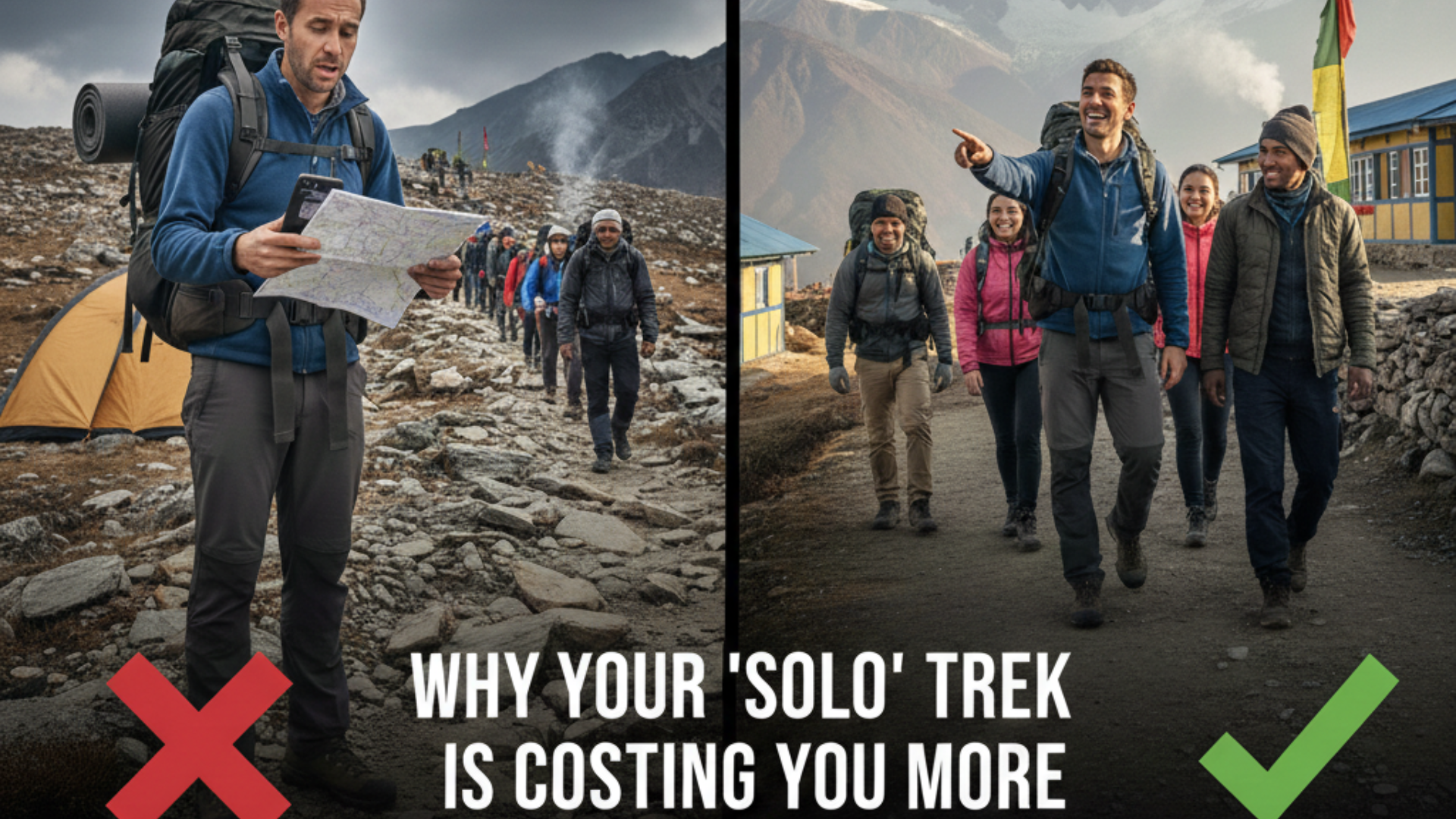
The allure of solo trekking—a solitary backpacker navigating trails with only mountains as company—has long romanticized Nepal. Yet, the reality of Himalayan trekking in 2026 is that the landscape has changed, impacting both legalities and cultural experiences. While saving money is appealing, attempting a Nepal trek alone could cost more than initially imagined. In this context, engaging with a reliable trekking company can be viewed as a valuable investment, ensuring safety and cultural immersion.
1. Legal Changes: The End of Free Solo Trekking
Since 2023, the Nepal Tourism Board (NTB) has enforced new regulations that impact independent trekkers.
* Mandatory Guides: For popular routes like the Annapurna Circuit, Langtang Valley, and Manaslu, hiring a licensed local guide through a registered agency is now required.
* Permit Acquisition: Individual travelers are no longer able to independently get a TIMS Card; it must be secured through a registered agency.
* Consequences of Non-Compliance: Those who trek alone in restricted areas risk fines, trail removal, and possible blacklisting.
Navigating these changing rules can turn the freedom of solo trekking into an administrative burden.
2. The Economic Pitfalls of Solo Trekking
Opting for a solo trek to cut costs may lead to unforeseen expenses.
* The Tourist Pricing Challenge: Without a local guide, language barriers and unfamiliarity with local customs can lead to inflated prices.
* Lodging Difficulties: During peak seasons, tea houses fill up quickly. Trekking companies often pre-book rooms, while solo trekkers might pay full price for less desirable accommodations.
* Logistical Complexities: While agencies streamline transportation, arranging flights or private jeeps alone might yield higher costs due to intermediary fees.
* The Value of Local Knowledge: Guides can help avoid overcharging and ensure fair prices for necessities like food and showers.
3. Safety Considerations: An Invaluable Factor
The unpredictable nature of the Himalayas introduces inherent risks.
* Altitude Sickness (AMS): Roughly 40% of trekkers above 3,000 meters experience AMS. A guide can discern a serious condition from simple dehydration.
* Professional Expertise: Experienced guides monitor oxygen levels and recognize critical warning signs.
* Emergency Assistance: Trekking companies are better positioned to coordinate rescue operations, especially in situations needing urgent helicopter evacuation.
* Weather Volatility: Guides possess an understanding of weather patterns and terrain stability that technology cannot replicate, especially when encountering sudden blizzards or landslides.
4. Cultural Immersion: Beyond Monetary Value
Trekking with a local company transforms the experience from mere observation to genuine cultural exchange.
* Language and Heritage: Nepal has a diverse array of ethnic groups, and guides serve as translators of local customs and histories.
* Local Economic Impact: Booking through a local company contributes to:
* Family Support: Fair salaries are given to guides and porters from mountain communities.
* Educational Opportunities: Income helps to fund education for children in Kathmandu.
* Trail Preservation: Some agency fees go toward maintaining trails and protecting the environment.
5. Decision Guide: Solo vs. Company Trekking (2026 Comparison)
| Feature | Solo Trekking (Independent) | Trekking with a Company |
| Legal Status | Prohibited in most major regions | 100% Legal & Compliant |
| Safety | High risk; self-reliant for rescue | High security; 24/7 support |
| Logistics | DIY permits, flights, and rooms | All-inclusive and pre-arranged |
| Cultural Depth | Surface-level observation | Deep immersion and translation |
| Real Cost | Hidden fees and “tourist prices” | Transparent, upfront pricing |
Real Cost: Solo vs. Group Treks in Nepal Conclusion: Don’t Forget the “Enjoyment” in Trekking
The point of your trip was to witness the grandeur of Nepal. If you find yourself concerned with maps, permits, and where you’ll be sleeping, you’ve lost sight of what you’re doing there.
You can’t pay for the mountains, but you can pay to admire them. Joining a trekking company does not mean that you are “giving up” your adventure, but that you will be able to tell someone about it.